
For social workers, one of the most critical moments in a client’s journey is the transition into supportive housing. It is a moment full of potential. Stable housing can change everything. It can be the foundation from which recovery takes hold, from which family relationships begin to heal, and from which a person starts to rebuild a life that feels worth living.
But it is also a moment that is easy to underestimate. Moving someone into housing is not the same as preparing them for housing. And when the preparation is insufficient, the placement often does not hold. The person ends up back where they started, sometimes worse off for having experienced another failure.
Social workers are uniquely positioned to bridge that gap. They are often the professionals closest to the client during this transition. Also, they understand the context. They know the history. And they are in the best position to do the preparation work that makes the difference between housing that holds and housing that does not.
This article is for social workers, case managers, discharge planners, and any professional working with clients who are transitioning into supportive housing. It covers what preparation actually looks like, what the most common failure points are, and how coordinating with community-based organizations in Solano County can make that preparation more effective.
Why Preparation Matters More Than Placement
There is a tendency in social services to measure success by placement. Did the client get housed? Check. Case closed. But placement is the beginning of the work, not the end of it.
Research on housing outcomes consistently shows that the period immediately following placement is one of the highest risk periods for housing loss. Lease violations, neighbor conflicts, inability to manage household responsibilities, mental health crises that go unsupported, and substance use relapse are among the most common reasons people lose housing shortly after being placed.
Most of these failure points are predictable. And most of them can be significantly reduced through deliberate, thorough preparation before the placement happens and coordinated support after it does.
Preparation is not a bureaucratic step. It is a clinical intervention. And treating it as such changes how social workers approach the transition.
Understanding the Client’s Full Picture Before Placement
Effective preparation starts with a thorough understanding of the client’s full situation. Not just their housing need, but the complete context of what they are carrying into the housing placement.
This means understanding:
Mental health status
Is the client currently stable? Are they engaged with mental health services? Is there a provider who will continue their care after placement? A client who is in the middle of a mental health crisis or who has no ongoing mental health support is at significantly higher risk of housing loss than one who is connected to consistent care.
Substance use history and current status
If substance use has been a factor in the client’s history, what is their current status? Are they in recovery? Are they actively using? What triggers are present in the proposed housing environment? As we covered in the article on What Is Sober Living and Is It Right for You?, the environment a person returns to has an enormous impact on recovery outcomes. The same principle applies to supportive housing placements.
Trauma history
Understanding a client’s trauma history is essential for anticipating how they will respond to the stress of transition and the demands of maintaining housing. Transitions are themselves stressful, and stress activates trauma responses. A client with significant unprocessed trauma may need additional support during and after placement that would not be apparent from a standard housing assessment.
Social supports
Who is in this person’s life? Are those relationships supportive or destabilizing? Does the client have people they can call when something goes wrong? Or are they effectively isolated? Isolation is one of the most significant risk factors for housing loss and for the mental health and substance use challenges that often precede it.
Practical skills and knowledge gaps
Can the client manage basic household responsibilities? Do they understand how to communicate with a landlord? Also, do they know their rights as a tenant? Do they have the financial literacy to manage rent and utilities within their income? Identifying these gaps before placement allows them to be addressed rather than discovered through a crisis.
Documentation status
Does the client have current identification, a Social Security card, and the other documents required for housing applications and for accessing ongoing services? Missing documentation is one of the most practical and preventable barriers to successful housing transition.
Having Honest Conversations About Expectations
One of the most important things a social worker can do before a housing placement is have an honest, detailed conversation with the client about what supportive housing actually involves. Many clients have expectations that do not match the reality of what they are moving into. And unmet expectations are a significant driver of early housing loss.
Honest preparation conversations cover:
What the housing environment will be like
Who else lives there? What are the rules? Likewise, what is the neighborhood like? What support is available on-site? What is not available on-site? The more specific and concrete this conversation is, the better prepared the client will be.
What will be expected of them
Lease obligations, rent payment schedules, rules about guests, expectations around noise and shared spaces, required participation in any programming. Clients who understand what is expected are significantly more likely to meet those expectations than those who are surprised by them after move-in.
What to do when things go wrong
This is perhaps the most important conversation, and the one most often skipped. Who do they call when there is a maintenance problem? What do they do if they have a conflict with a neighbor? Where do they turn if they are struggling with their mental health or their sobriety? Having specific answers to these questions before a crisis happens means the client has a plan rather than a panic response when difficulties arise.
What success looks like over time
Supportive housing is not just a place to sleep. For many clients it is a transitional step toward greater independence. Helping the client understand and connect to that longer-term picture gives the housing placement meaning beyond the immediate relief of having a place to land.
Coordinating Ongoing Support Before Move-In
The most effective housing transitions are ones where the support network is in place before the client moves in, not assembled in response to a crisis after.
This means social workers should coordinate the following before placement:
Mental health services
If the client has mental health needs, the provider relationship should be established or confirmed before move-in. A referral made on the day of move-in is not the same as a confirmed appointment with a provider the client has already met.
Substance use support
If substance use is a factor, connection to a recovery community, a sponsor, a peer support worker, or an outpatient program should be in place before the transition. The stress of moving is itself a relapse risk. Having support structures confirmed before that stress arrives is essential.
Care management
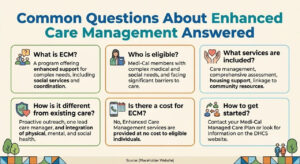
For Medi-Cal members in Solano County, Enhanced Care Management through Solano Impact Care provides exactly the kind of coordinated, whole-person support that makes housing transitions more sustainable. A care manager who is already engaged with the client before move-in can provide continuity through the transition and coordinate across all the dimensions of the client’s life simultaneously.
As we covered in the article on What Does Solano Impact Care Do?, Solano Impact Care’s care managers meet clients where they are and coordinate across health, mental health, housing, and social services. For a client transitioning into supportive housing, having that coordination layer in place before move-in significantly reduces the risk of the placement breaking down in the early weeks.
Housing sustainability support
CalAIM’s Community Supports program includes housing tenancy and sustainability services that are specifically designed to help clients maintain housing after placement. Connecting eligible Medi-Cal members to these services before move-in means support is available from day one rather than being pursued reactively after something goes wrong.

Matching the Client to the Right Housing Environment
Not every supportive housing option is the right fit for every client. One of the most important preparation tasks for social workers is making sure the placement actually matches the client’s needs, not just their eligibility.
Key matching considerations include:
Level of support available on-site
Some supportive housing programs have significant on-site support including case managers, programming, and crisis response. Others are essentially independent housing with minimal on-site support. Matching the level of on-site support to the client’s actual needs is critical.
Sobriety requirements
Some programs require sobriety as a condition of tenancy. Others operate under a harm reduction model that does not require sobriety as a precondition. Placing a client who is not yet in stable recovery into a program with strict sobriety requirements sets them up to fail.
Gender-specific needs
For women, particularly women who have experienced domestic violence, trauma, or who are navigating recovery and family reunification simultaneously, gender-specific housing programs offer a level of safety and community that mixed-gender programs often cannot.
Hazel’s Tranquility Place in Vallejo is exactly this kind of resource for women in Solano County. It is a transitional and sober living home founded by K. Patrice Williams, providing a safe haven and support services for women reentering the community from incarceration or recovering from substance use. It is a structured, supportive housing program created to help people stabilize during vulnerable transitions. Founded in 2019 while K. Patrice Williams was running for Solano County Supervisor, after she witnessed firsthand the gaps in housing and support for women and children in Solano County, Hazel’s Tranquility Place was built in direct response to what she saw. For social workers placing women clients in Solano County, it is a resource worth knowing well.
Learn more at hazelstranquility.org.
Community and cultural fit
Housing placements that feel culturally alienating or that place clients far from their existing community connections tend to be less stable than those where the client has a sense of belonging. Where possible, proximity to existing support networks, faith communities, recovery groups, and family should be considered in placement decisions.
Building the Client’s Own Capacity
Beyond coordinating external supports, preparation for supportive housing should include building the client’s own practical capacity for the responsibilities that housing involves.
This is where organizations like Solano Home Assist play an important role. Solano Home Assist provides housing counseling and workshops for Solano County residents that build practical knowledge and skills around tenancy. For clients who are moving into housing for the first time in years, or for the first time ever with full independent responsibility, this kind of practical education makes a meaningful difference.
Topics that are worth covering with clients before placement include:
- How to read and understand a lease
- Tenant rights in California and what to do if they are violated
- How to communicate effectively with a landlord
- Budgeting for rent, utilities, and other housing costs within their income
- What to do if they fall behind on rent
- How to maintain the physical space to meet lease requirements
- What resources exist if they need emergency assistance
None of this knowledge should be assumed. For many clients transitioning into supportive housing, these are genuinely new responsibilities. Treating that as a practical skill-building opportunity rather than assuming competence sets clients up for success rather than silent failure.
Addressing Employment as Part of Housing Stability
Employment is directly connected to housing stability. Clients who have income are significantly more likely to maintain housing than those who do not. For social workers preparing clients for supportive housing, employment readiness should be part of the preparation conversation even when it is not the immediate focus.
Additionally, for clients in Solano County who are ready to pursue employment, Match2Hire bridges the gap between job seekers and employers with a specific focus on people who face real barriers including criminal records and employment gaps. For clients who need to build digital skills before entering the job market, Solano EmpowerTech provides digital literacy workshops and job readiness training specifically for justice-involved individuals.
Connecting clients to these resources as part of housing preparation, even if employment is a longer-term goal, plants the seed early and gives clients a direction to move toward once housing is stable.
After Placement: Staying Involved Through the Transition
The social worker’s role does not end at move-in. The first thirty to ninety days after placement are the highest risk period for housing loss. Staying actively involved during this window makes a significant difference in outcomes.
After move-in, social workers should:
- Check in proactively rather than waiting to hear that something has gone wrong
- Confirm that all coordinated support services are actually running as planned
- Address small problems before they become large ones
- Help the client navigate any conflicts or confusion with housing management
- Reinforce the coping strategies and communication skills discussed during preparation
- Celebrate progress, because positive reinforcement during a vulnerable transition genuinely matters
If a client is connected to Solano Impact Care’s Enhanced Care Management, the care manager will also be monitoring and supporting the transition. Coordination between the social worker and the care manager during this period produces better outcomes than either working in isolation.
Referring to Solano Impact Care
For social workers in Solano County working with Medi-Cal members who are transitioning into supportive housing, Solano Impact Care is a key partner in making those transitions successful. Their team provides Enhanced Care Management and Community Supports including housing navigation and sustainability services. Their care managers have lived experience with homelessness, incarceration, mental health challenges, and substance use. They understand the transition from the inside out.
Referrals can be made by contacting Solano Impact Care directly at (707) 301-4051 or care@solanoimpactcare.org. Social workers can also direct clients to solanoimpactcare.org/get-started to begin the intake process.