If you have ever tried to find housing in California while dealing with a low income, a complicated background, or a crisis situation, you already know that the process is not straightforward. It is not a matter of searching online, filling out an application, and moving in. The path from housing instability to stable housing involves paperwork, eligibility requirements, waitlists, income verification, background checks, landlord negotiations, and a system that assumes you already know how to navigate it.
For most people in that situation, the gap between needing housing and actually getting housed is not a lack of desire. It is a lack of the specific knowledge, time, energy, and support required to move through a system that was not designed with them in mind. They fall into that gap and stay there, sometimes for months or years, not because housing does not exist but because accessing it requires more than any one person in crisis can reasonably manage alone.
Housing navigation services exist to close that gap. And in California, for eligible Medi-Cal members, these services are now available at no cost through CalAIM’s Community Supports program, specifically to help address housing instability and coordinate long-term housing sustainability. This article explains what housing navigation actually is, what it covers, who qualifies, and how to access it in Solano County.
What Housing Navigation Actually Means
Housing navigation is not a referral to a list of available units. It is active, hands-on support through every stage of the process of finding, securing, and maintaining stable housing.
A housing navigator is someone who works alongside you to understand your specific housing situation, identify the options that are realistic for your circumstances, help you prepare and submit applications, advocate on your behalf with landlords and housing programs, and follow through until you are actually housed, not just until a referral has been made on paper.
The distinction between a referral and genuine navigation matters enormously in practice. A referral says here is a resource that might help you. Navigation says let us figure out together what your options are, prepare you to access them, and make sure the connection actually happens. For someone managing mental health challenges, recovery, incarceration history, or the cognitive and emotional load of homelessness, that active support is often the difference between housing that happens and housing that stays out of reach.
What Housing Navigation Services Include
Housing navigation under CalAIM’s Community Supports program covers a specific and meaningful set of services. These include:
Assessment of housing needs and barriers
Before anything else, a housing navigator works with you to understand your full situation. This includes your current living circumstances, your income and benefits, your rental history, your background, any documentation you have or are missing, and the specific barriers that have made housing difficult to access or maintain. This assessment is not a screening to determine whether you deserve help. It is the foundation of a plan that is built around your actual circumstances.
Identifying appropriate housing options
Not every housing program is the right fit for every person. Some programs have income requirements. Some have restrictions based on background. Some prioritize specific populations such as veterans, families with children, or people with disabilities. A housing navigator knows the landscape of available programs and can identify which ones are genuinely accessible given your specific situation, saving you the exhausting and demoralizing experience of applying to programs you cannot actually get into.
Application assistance
Completing housing applications correctly and completely is harder than it sounds. Missing documents, incorrectly completed sections, and failure to include required supporting materials are among the most common reasons applications are delayed or denied. A housing navigator helps you gather the documents you need, complete applications accurately, and submit them in a way that gives you the best chance of success.
Advocacy with landlords and housing programs
Sometimes the barrier to housing is not a missing document or an incomplete application. It is a landlord who is hesitant about a background or credit history, or a housing program that needs more information about a specific situation. A housing navigator can advocate on your behalf in those conversations, providing context and support that can make the difference between a door opening and staying closed.
Connection to move-in assistance
Securing a unit is only part of the challenge. Coming up with first month’s rent, a security deposit, and the practical requirements of actually moving in can be insurmountable without support. Housing navigation services include connection to move-in assistance resources that help bridge that financial gap for people who qualify.
Coordination with other services
Housing does not exist in isolation from the other dimensions of a person’s life. A housing navigator works in coordination with care managers, mental health providers, recovery support programs, and other services to make sure that housing is addressed as part of a broader stability plan rather than as a separate problem to be solved independently.
Housing Sustainability: What Happens After You Are Housed
Getting housed is the first step. Staying housed is the ongoing work, and it is something that housing navigation services also address.
Housing sustainability services are the component of CalAIM’s Community Supports program that focuses specifically on helping people who have secured housing maintain that housing over the long term. This is important because many of the factors that led to housing instability in the first place do not disappear the moment someone gets a key. Without ongoing support, the same barriers, financial instability, mental health challenges, relationship difficulties, or lack of knowledge about tenant rights, can lead to eviction or loss of housing within months of being placed.
Housing sustainability services include:
- Support with understanding lease obligations and tenant rights
- Help communicating with landlords when issues arise
- Assistance accessing emergency rental assistance when a person falls behind on rent
- Connection to financial counseling and budgeting support
- Help resolving conflicts or misunderstandings with landlords before they escalate to eviction
- Coordination with other services to address the underlying issues that threaten housing stability
- Support navigating the process if a housing situation needs to change
As we covered in the article on How Solano Impact Care Connects Residents to Housing Help Through Solano Home Assist, housing sustainability requires more than finding a place to live. It requires building the knowledge, skills, and support network that allow a person to maintain that housing through the inevitable challenges that arise. Solano Home Assist’s workshop and one-on-one counseling model is specifically designed to build that capacity in Solano County residents.
Who Qualifies for Housing Navigation Through Medi-Cal
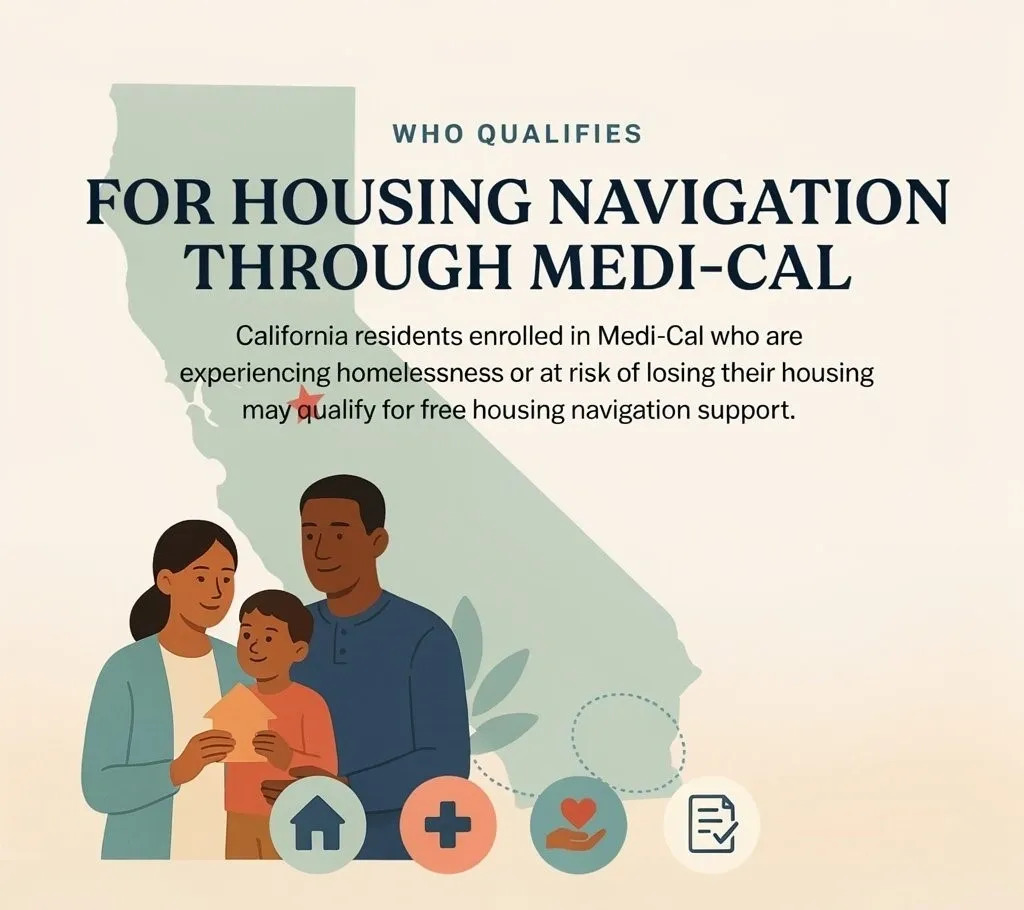
Housing navigation and housing sustainability services are available through CalAIM’s Community Supports program to Medi-Cal members who are experiencing homelessness or who are at risk of homelessness. This includes people who are:
- Currently unsheltered or living in a place not meant for human habitation
- Staying in an emergency shelter or transitional housing program
- At imminent risk of losing their current housing due to eviction, lease nonrenewal, or domestic violence
- Exiting an institution such as a hospital, jail, or treatment facility with no stable housing to return to
- Doubled up with others due to housing instability and at risk of losing that arrangement
These services are provided at no cost to eligible Medi-Cal members through CalAIM’s Community Supports program to help address housing instability and coordinate long-term housing sustainability. You do not pay anything out of pocket to receive housing navigation or housing sustainability services if you are an eligible Medi-Cal member.
Eligibility is determined based on your Medi-Cal enrollment and your housing situation. The fastest way to find out whether you qualify is to connect with a care manager or housing navigator who can assess your specific circumstances.
Why Housing Is a Health Issue?
Housing navigation sits within the healthcare system through CalAIM for a specific reason: housing instability is one of the most powerful drivers of poor health outcomes of any factor that can be addressed through the healthcare system.
People who are unstably housed or experiencing homelessness have significantly higher rates of chronic disease, mental health conditions, substance use disorders, and emergency room visits than those who are stably housed. They are less able to manage existing health conditions because the basic requirements of medication management, consistent sleep, proper nutrition, and stress reduction are all compromised by housing instability. Hospitalizations are more frequent, longer, and more expensive. Recovery from both physical and mental health conditions is significantly harder.
When a person is discharged from a hospital back into homelessness, the likelihood of readmission within thirty days is dramatically higher than for someone discharged to stable housing. This is not just a human cost. It is an enormous financial cost to the healthcare system, which is part of why CalAIM specifically funded housing navigation as a Medi-Cal benefit. Addressing housing instability is effective healthcare, not just social services.
For people in recovery from substance use, the connection between housing and outcomes is equally clear. As we discussed in the article on What Is Sober Living and Is It Right for You?, returning to an unstable or triggering housing environment after treatment is one of the most significant risk factors for relapse. Stable, appropriate housing is not a reward for being in recovery. It is one of the foundational conditions that makes sustained recovery possible.
The Connection Between Housing Navigation and Enhanced Care Management
Housing navigation and Enhanced Care Management work together as part of CalAIM’s integrated approach to supporting Medi-Cal members with complex needs.
Enhanced Care Management provides the coordination layer, a dedicated care manager who holds the full picture of a member’s health, mental health, housing, and social needs and coordinates across all of those dimensions simultaneously. When housing is identified as a priority in a member’s care plan, which it almost always is for members experiencing homelessness or housing instability, the care manager coordinates the connection to housing navigation services and stays involved to make sure that connection actually happens.
This coordination matters because housing instability rarely exists in isolation. It is almost always connected to other challenges, mental health conditions, substance use, incarceration history, lack of income, or family crisis. Addressing housing without addressing those connected issues tends to produce housing that does not hold. Addressing everything together, through the coordinated approach that Enhanced Care Management provides, produces more durable outcomes.
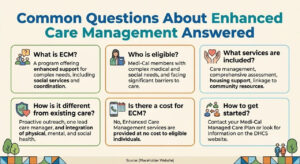
As we covered in the article on Common Questions About Enhanced Care Management Answered, ECM is available at no cost to eligible Medi-Cal members in Solano County and is designed specifically for people with the most complex needs, including those experiencing homelessness.
For Women and Mothers: Hazel’s Tranquility Place
For women in Solano County who need more than navigation support, who need an actual safe and structured place to live during the process of rebuilding their lives, Hazel’s Tranquility Place in Vallejo provides exactly that.
Hazel’s Tranquility Place is a structured, supportive housing program in Solano County created to help people stabilize during vulnerable transitions. It is a transitional and sober living home in Vallejo founded by K. Patrice Williams, providing a safe haven and support services for women reentering the community from incarceration or recovering from substance use.
Founded in 2019 while K. Patrice Williams was running for Solano County Supervisor, after she witnessed firsthand the serious gaps in housing and support for women and children in Solano County, Hazel’s Tranquility Place was built on the understanding that women in crisis need more than a navigation service. They need a place where healing is structurally supported, where sobriety is reinforced by the environment, and where the work of rebuilding a family and a life can actually begin.
For Medi-Cal members connected to Solano Impact Care who are women navigating homelessness, recovery, or reentry, Hazel’s Tranquility Place provides the residential foundation that makes everything else possible. It is one of the most important resources in the Solano County housing support network. Learn more at hazelstranquility.org.

How Solano Impact Care Delivers Housing Navigation
Solano Impact Care provides housing navigation and housing sustainability services as part of its CalAIM Community Supports delivery in Solano County. Their approach to this work reflects the same principles that define everything they do.
The team has personally navigated housing instability, incarceration, and the experience of trying to access systems that felt impossible to penetrate from the outside. They know what it feels like to not know where you are sleeping tonight. They know how exhausting and demoralizing the housing application process can be when you are carrying everything else that comes with rebuilding a life. And they know which doors to knock on in Solano County because they have knocked on them themselves.
That lived experience translates into housing navigation that is genuinely helpful rather than perfunctory. It means care managers who anticipate barriers before they become crises, who know which programs are actually accepting applications right now and which ones have two-year waitlists, who can have honest conversations with landlords, and who will follow through on a connection rather than just making a referral and closing the loop on paper.
Solano Impact Care’s housing navigation work is also embedded in a broader network of housing resources in Solano County that includes Solano Home Assist for housing counseling and workshops, Hazel’s Tranquility Place for women who need transitional housing, and the full range of CalAIM Community Supports that can address move-in assistance, post-hospitalization housing, and recuperative care for members who need them.
Getting Connected
If you are a Medi-Cal member in Solano County who is experiencing homelessness, at risk of losing your housing, or trying to find stable housing after leaving a hospital, treatment program, or correctional facility, housing navigation services are available to you right now at no cost.
The first step is reaching out to Solano Impact Care to find out whether you qualify and what housing support looks like in your specific situation. Their team can assess your circumstances, identify which Community Supports and housing resources apply to you, and walk alongside you through the process of getting housed and staying housed.
Call (707) 301-4051 or email care@solanoimpactcare.org to get started.