Most people have heard the phrase trauma-informed care at some point. It shows up in conversations about mental health, recovery, social services, and community support. It sounds important. But for a lot of people, including many of the providers who use the phrase, the actual meaning of it is vague. It becomes one of those terms that gets repeated often enough to feel meaningful without anyone being entirely clear about what it requires in practice.
That vagueness has real consequences. When trauma-informed care is reduced to a buzzword rather than a genuine operating principle, the people who most need it continue to experience support in ways that retraumatize rather than heal. They encounter systems that respond to behavior without understanding its roots. They face providers who interpret survival strategies as noncompliance. They leave appointments, programs, and services feeling worse than when they arrived, not because anyone intended to harm them, but because the environment was not built with their experience in mind.
Understanding what trauma-informed care actually means, and what it looks like when it is done well, matters for anyone seeking support and for anyone providing it.
What Trauma Actually Is?
Before defining trauma-informed care, it helps to be clear about what trauma is. Because trauma is one of the most misunderstood concepts in the mental health and recovery space, and that misunderstanding shapes how people interpret their own experiences.
Trauma is not defined by the event that happened. It is defined by the impact that event had on the person who experienced it. Two people can go through the same experience and one may be significantly traumatized while the other is not. What determines whether something is traumatic is not its objective severity but whether it overwhelmed the person’s capacity to cope and process what happened.
The Substance Abuse and Mental Health Services Administration defines trauma as resulting from an event, series of events, or set of circumstances that is experienced by an individual as physically or emotionally harmful or life threatening and that has lasting adverse effects on the individual’s functioning and mental, physical, social, emotional, or spiritual wellbeing.
Trauma can result from:
- Childhood abuse, neglect, or household dysfunction
- Domestic violence
- Sexual assault
- Community violence
- Sudden loss of a loved one
- Serious accidents or medical events
- Natural disasters
- Systemic experiences of racism, discrimination, or oppression
- Incarceration, either personal or of a family member
- Homelessness
- War or community conflict
Many of the people Solano Impact Care serves have experienced multiple forms of trauma, often from early childhood onward. Understanding that is not background information. It is central to understanding why they respond to situations the way they do, and what kind of support actually helps.
What Trauma Does to People?
Trauma changes the brain and the nervous system in ways that are measurable and lasting. This is not metaphorical. It is neurobiological. Understanding what trauma does to people is essential for understanding why trauma-informed care requires a fundamentally different approach than traditional service delivery.
When a person experiences trauma, the brain’s stress response system is activated. In the moment of threat, this is adaptive. The body mobilizes resources to survive. The problem is that for many people who have experienced repeated or severe trauma, particularly in childhood, the stress response system becomes chronically activated. The brain learns that the world is dangerous and that threats can come from anywhere, including from people who are supposed to help.
This has specific and predictable effects on how a person experiences the world:
- Hypervigilance: A constant state of scanning for threat, even in environments that are objectively safe. This can look like anxiety, difficulty relaxing, or what some providers misread as aggression or hostility.
- Reactivity: Strong emotional responses to stimuli that seem small to an outside observer but that trigger the nervous system based on past experience. What looks like overreaction is often a survival response that was learned in an environment where that reaction was necessary.
- Difficulty trusting: When the people who were supposed to protect you were sources of harm, or when institutions have consistently failed you, trust does not come easily. This is not a character flaw. It is a rational adaptation to a history of betrayal.
- Dissociation: A sense of detachment from oneself or one’s surroundings, which can range from mild emotional numbness to more significant disconnection from reality. Dissociation is the mind’s way of managing overwhelming experience.
- Shame: Trauma, particularly childhood trauma and trauma involving violation, often produces deep and pervasive shame that affects how a person sees themselves and what they believe they deserve.
- Difficulty regulating emotions: The ability to manage emotional responses develops through early relationships and experiences. When those relationships were unsafe or unavailable, emotional regulation is a skill that often needs to be developed later in life with deliberate support.
These responses are not symptoms of weakness or disorder in isolation. They are the predictable consequences of surviving difficult experiences. Trauma-informed care starts from that understanding.
The Six Principles of Trauma-Informed Care
The Substance Abuse and Mental Health Services Administration has identified six key principles that define a genuine trauma-informed approach. These principles apply not just to individual providers but to entire organizations and systems.
Safety
The person receiving care needs to feel physically and emotionally safe in the environment where care is being delivered. This means attending to physical space, to the way interactions are conducted, and to the communication of clear and consistent expectations. For people who have experienced significant trauma, feeling safe is not automatic. It has to be actively created.
Trustworthiness and transparency
Trauma survivors often have significant reasons not to trust institutions or providers. Building trust requires radical transparency about what is happening, why, and what to expect. It means doing what you say you will do, consistently and without exception.
Peer support
Connection with others who have lived through similar experiences is one of the most powerful healing mechanisms available. Peer support reduces isolation, provides living proof that recovery is possible, and creates a form of understanding that professional support alone cannot replicate.
Collaboration and mutuality
Trauma-informed care recognizes that healing happens in relationship, and that the relationship between a provider and the person receiving support is itself a healing mechanism. This means moving away from a model where services are done to people and toward one where they are developed with people.
Empowerment, voice, and choice
Trauma often involves experiences of powerlessness and loss of control. Trauma-informed care actively restores a sense of agency by offering choices wherever possible, supporting the development of personal strengths, and centering the goals and priorities of the person receiving care rather than the priorities of the system delivering it.
Cultural, historical, and gender sensitivity
Trauma does not happen in a vacuum. It occurs within specific cultural and historical contexts, and those contexts shape how trauma is experienced, expressed, and healed. A trauma-informed approach recognizes the role of historical trauma, systemic oppression, and cultural identity in the experiences of the people it serves.

What Trauma-Informed Care Looks Like in Practice
The principles above are not abstract. They translate into specific, concrete practices that look and feel different from traditional service delivery.
In a trauma-informed environment:
- Intake processes are designed to minimize re-traumatization. Questions about trauma history are asked with care, in contexts where the person feels safe, and with clear explanation of why the information is being gathered and how it will be used.
- Providers explain what they are doing and why before they do it, rather than assuming the person will simply comply with procedures.
- Physical spaces are designed to feel safe and welcoming rather than institutional and clinical. Waiting rooms are calm. Interactions are warm. The environment communicates that the person is valued, not processed.
- When someone misses an appointment or disengages from services, the first response is curiosity rather than judgment. What happened? What got in the way? How can we make this more accessible?
- Providers recognize that behavior that looks like resistance or noncompliance is often a survival strategy. The question is not how to get the person to comply but what the behavior is communicating about what they need.
- People are given real choices wherever possible, including choices about how their information is shared, what services they participate in, and how their care is delivered.
- Providers take care of their own wellbeing, because secondary trauma is real, and providers who are burnt out or dysregulated cannot provide trauma-informed care regardless of their training.
The Difference Between Trauma-Informed and Trauma-Sensitive
These terms are sometimes used interchangeably, but there is a useful distinction worth understanding.
Trauma-sensitive care means being aware that the people you serve may have trauma histories and trying not to make things worse. It is a baseline level of awareness and care that any decent service provider should maintain.
Trauma-informed care goes further. It means that the entire approach, the policies, the procedures, the physical environment, the training of staff, and the culture of the organization, is actively shaped by an understanding of trauma and its effects. It is not just about individual providers being kind. It is about systems being structurally designed to support healing rather than inadvertently undermine it.
Why This Matters for Recovery
For people in recovery from substance use, trauma-informed care is not a nice-to-have. It is a clinical necessity. As we covered in the article on What Is Dual Diagnosis and How Is It Treated?, the overlap between trauma histories and substance use disorders is substantial. Many people use substances specifically to manage trauma symptoms that have never been addressed in any other way.
When recovery support is not trauma-informed, it often fails not because people do not want to get better but because the support environment inadvertently reactivates the same stress responses that drove the substance use in the first place. A provider who responds to a missed appointment with punitive consequences, a program that requires people to disclose sensitive information in group settings before they have established trust, a system that makes people feel surveilled rather than supported, all of these can trigger trauma responses that make engagement with recovery nearly impossible.
Trauma-informed recovery support creates the conditions under which the actual work of healing can happen. It does not demand that people perform recovery in ways that feel unsafe. It builds the safety and trust that make genuine change possible.
Why Grief and Trauma Are Inseparable in This Work
As we explored in the article on Grief, Loss, and Recovery: How They Are Connected, unprocessed grief and trauma are often the root of the challenges that bring people into recovery and social services in the first place. Trauma-informed care that does not make space for grief is missing a central piece of what healing requires.
Housing sustainability services are the component of CalAIM’s Community Supports program that focuses specifically on helping people who have secured housing maintain that housing over the long term. This is important because many of the factors that led to housing instability in the first place do not disappear the moment someone gets a key. Without ongoing support, the same barriers, financial instability, mental health challenges, relationship difficulties, or lack of knowledge about tenant rights, can lead to eviction or loss of housing within months of being placed.
Many people who have experienced homelessness, incarceration, family separation, or long-term addiction are carrying losses that have never been formally acknowledged or mourned. The losses are real, the grief is real, and a trauma-informed approach recognizes both rather than focusing exclusively on symptom management or behavioral change.
Creating space for grief within a trauma-informed framework means acknowledging what has been lost rather than rushing past it. It means not requiring people to perform positivity or motivation before they have had the chance to be honest about what they are carrying. It means understanding that healing is not linear and that the path through grief looks different for every person.

How Solano Impact Care Embeds Trauma-Informed Care
At Solano Impact Care, trauma-informed care is not a training module that staff complete once a year. It is the operating principle that shapes every interaction, every program design, and every relationship between team members and the people they serve.
What makes Solano Impact Care’s trauma-informed approach genuinely different is the foundation it is built on. The team has personally experienced homelessness, incarceration, mental health crises, substance use, grief, and loss. They have been on the receiving end of systems that were not trauma-informed, and they understand from the inside what it feels like to be in a vulnerable moment and encounter a response that makes things worse instead of better.
That lived experience is not separate from their professional practice. It is the source of it. When a care manager at Solano Impact Care sits across from someone who has just been released from incarceration, or who is in the middle of a mental health crisis, or who has lost custody of their children and does not know where to start, they bring something that no amount of clinical training can fully replicate: the knowledge of what it feels like to be in that chair, and the genuine belief that the person sitting in it can find their way through.
The approach this team brings reflects all six principles of trauma-informed care in practice. Safety is created through consistency, warmth, and transparency. Trust is built through follow-through and honesty. Peer support is embedded in the team’s own composition. Collaboration happens because care managers genuinely work with clients rather than directing them. Empowerment happens because the goal is always the client’s own agency and self-determination, not compliance with a program. And cultural sensitivity is real because the team is from this community and understands its specific history and dynamics.
For women in Solano County who need a residential environment where trauma-informed care is built into the structure of daily life, Hazel’s Tranquility Place in Vallejo offers exactly that. Founded in 2019 by K. Patrice Williams after she witnessed firsthand the gaps in housing and support for women and children in Solano County during her campaign for Solano County Supervisor, Hazel’s Tranquility Place provides transitional housing and sober living support for women reentering the community from incarceration or recovering from substance use, in an environment designed around safety, structure, and genuine compassion. Learn more at hazelstranquility.org.
Getting Support in Solano County
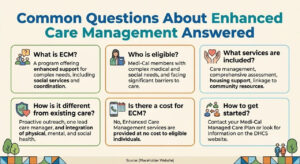
If you are in Solano County and looking for support that is genuinely trauma-informed, not just in name but in practice, Solano Impact Care provides Enhanced Care Management and Community Supports for eligible Medi-Cal members through a team that understands trauma from the inside out.
To get connected, call (707) 301-4051 or email care@solanoimpactcare.org.
Trauma-informed care is not a luxury. It is the baseline that everyone who has been through something hard deserves when they ask for help. And it is what Solano Impact Care is committed to providing, every day, for every person who walks through the door.