Housing is not just a roof. It is the foundation that every other part of a stable life is built on. Without it, recovery becomes nearly impossible to sustain. Employment becomes harder to find and keep. Mental health deteriorates faster. Children cannot thrive. And the cycle of crisis, emergency intervention, and system involvement keeps repeating at enormous cost to individuals, families, and the broader community.
In Solano County, one of the most persistent barriers people face when trying to rebuild their lives is not the absence of housing resources. It is the inability to access the ones that exist. The paperwork is confusing. The eligibility requirements are complex. The waitlists are long and the processes are opaque. People who genuinely need help give up before they get it, not because they do not want it, but because navigating the housing system alone, while also managing recovery, mental health, family responsibilities, and the weight of starting over, is simply too much.
This is exactly where the connection between Solano Impact Care and Solano Home Assist becomes critical. Together they address both sides of that problem, the coordination and the navigation, in a way that gives Solano County residents a real chance at stable, lasting housing.
What Solano Home Assist Does
Solano Home Assist is committed to serving as a vital bridge within the housing sector of Solano County. Their mission is to facilitate access to crucial housing resources, identify and overcome barriers, and empower residents through workshops and one-on-one counseling services.
That mission statement is worth unpacking because each part of it reflects a specific and meaningful commitment.
Facilitating access to housing resources: means more than maintaining a list of programs. It means actively helping people understand what exists, what they qualify for, and how to apply in a way that gives them the best chance of success. Many housing programs in California have application processes that are genuinely difficult to navigate without support, and many of the people who most need those programs are the least equipped to navigate them alone.
Identifying and overcoming barriers: means Solano Home Assist does not just point people toward resources and step back. They engage with the specific obstacles a person faces and work actively to address them. A barrier might be a lack of documentation, a credit history with negative marks, a prior eviction, a criminal record, or simply a lack of knowledge about what rights and options exist. Solano Home Assist works to move people through and around those barriers rather than leaving them to figure it out alone.
Empowering residents through workshops and one-on-one counseling: reflects an understanding that lasting housing stability requires more than finding a place to live. It requires the knowledge and skills to maintain that housing over time, to understand tenant rights, to manage a budget, to communicate effectively with landlords, and to access resources when new challenges arise. The educational dimension of Solano Home Assist’s work builds that capacity in residents, which is what makes the difference between housing that holds and housing that does not.
Why Housing Navigation Requires Dedicated Support
People who have never needed housing assistance sometimes underestimate how complex the process actually is. The reality for someone trying to access housing resources in Solano County while also managing recovery, incarceration history, or mental health challenges is that the system asks a great deal.
A typical housing assistance application process might require:
- A valid government-issued photo ID
- Proof of income or benefits
- Social Security documentation
- Rental history, which can be a significant barrier for people with evictions or gaps
- Background check results, which create barriers for people with criminal records
- References from previous landlords
- In some cases, documentation of disability or medical need
For someone who has just been released from incarceration, who has been experiencing homelessness, or who is in early recovery, many of these requirements represent genuine obstacles. Not having an ID is more common than most people realize. Not having rental history is nearly universal for people coming out of long-term institutional settings. Not having positive landlord references is a predictable consequence of the kind of housing instability that often accompanies addiction.
Solano Home Assist understands these barriers specifically and provides the support to work through them systematically, which is what makes their one-on-one counseling model so effective for the population Solano Impact Care serves.

How Solano Impact Care and Solano Home Assist Work Together
The connection between Solano Impact Care and Solano Home Assist is not a simple referral relationship where one organization hands someone a phone number and moves on. It is a coordinated partnership where care management and housing navigation work alongside each other to address the full picture of what a person needs.
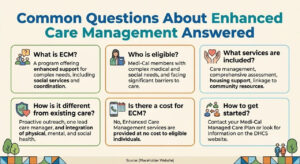
Solano Impact Care’s Enhanced Care Management provides the coordination layer. A care manager works with a client to assess their full situation, including their housing needs, their health and mental health needs, their recovery status, their employment goals, and the practical barriers they face. When housing is identified as a priority, which it almost always is for people with complex needs, the care manager connects the client to Solano Home Assist in a way that is warm, supported, and followed through on.
That follow-through matters. One of the most common failure points in social services is the gap between a referral being made and a service actually being accessed. People get referred somewhere and then do not follow through for any number of reasons: transportation barriers, anxiety about engaging with a new organization, competing demands on their time and energy, or simply not knowing what to say when they call. Solano Impact Care’s care managers bridge that gap by staying involved through the connection process, not just making the referral and closing the loop on paper.
On the other side of that connection, Solano Home Assist’s counselors provide the housing-specific expertise that care managers are not designed to replace. Understanding the nuances of California housing programs, tenant rights, application processes, and landlord negotiation requires specialized knowledge that a general care management program cannot fully provide. Solano Home Assist brings that expertise, and the combination of coordinated care management and dedicated housing navigation gives clients access to both.
The Housing and Health Connection
People who are unstably housed or experiencing homelessness have significantly higher rates of chronic disease, mental health conditions, substance use disorders, and emergency room visits than their housed counterparts. They are less able to manage existing health conditions because the basic requirements of medication storage, consistent sleep, proper nutrition, and stress management are all compromised by housing instability.
Conversely, when people are housed, health outcomes improve across almost every measure. Mental health stabilizes. Recovery becomes more sustainable. Children perform better in school. Adults engage more consistently with employment. The downstream effects of stable housing ripple through every dimension of a person’s life and their family’s life.
This is why housing is not a separate track from health and recovery support at Solano Impact Care. It is integrated into the care plan from the beginning, treated as the foundational intervention that makes everything else possible.
For Women and Mothers: Hazel’s Tranquility Place
For women in Solano County who need not just housing navigation support but actual transitional housing during a vulnerable period of rebuilding, Hazel’s Tranquility Place in Vallejo provides exactly that.
Hazel’s Tranquility Place is a structured, supportive housing program in Solano County created to help people stabilize during vulnerable transitions. It is a transitional and sober living home located in Vallejo, founded by K. Patrice Williams, providing a safe haven and support services for women reentering the community from prison or recovering from substance use.
The organization was founded in 2019 while K. Patrice Williams was running for Solano County Supervisor, after she witnessed firsthand the serious gaps in housing and programming for women and children in Solano County. What she saw during that campaign made clear that women in crisis needed more than a referral to a waiting list. They needed a safe, structured, and compassionate environment where sobriety, stability, and family healing could all happen at once.
For a woman working with Solano Impact Care who needs transitional housing while she navigates the broader housing system with Solano Home Assist’s support, Hazel’s Tranquility Place provides the residential foundation that makes that navigation possible. Having a stable, safe address is not just a personal comfort during the process. It is often a prerequisite for accessing other housing programs, maintaining engagement with recovery support, and demonstrating to courts or case workers the kind of environmental stability that reunification and custody processes require.
You can learn more and get connected at hazelstranquility.org.
Workshops as a Tool for Lasting Stability
One of the distinctive elements of Solano Home Assist’s approach is its investment in education through workshops. This reflects an understanding that lasting housing stability is not just about getting housed. It is about staying housed, which requires knowledge and skills that many people have never had the opportunity to develop.
Workshop topics relevant to Solano County residents rebuilding their housing stability might include:
- Understanding your rights as a tenant in California
- How to read and negotiate a lease
- Budgeting for housing costs including utilities, deposits, and unexpected expenses
- How to communicate effectively with landlords when problems arise
- What to do if you receive an eviction notice
- How to build or repair credit in ways that improve future housing access
- Understanding the difference between subsidized housing programs and how to access each
This educational dimension of Solano Home Assist’s work is what builds the long-term capacity that keeps people housed after the initial support ends. It is the difference between a program that solves an immediate crisis and one that builds lasting stability.
As we covered in the article on Setting Goals When You Have Lost Everything: A Practical Guide, sustainable rebuilding happens in layers and requires both practical support and the development of skills and knowledge that a person can carry forward independently. Solano Home Assist’s workshop model is built on exactly that principle.
Navigating California’s Housing Landscape
California’s housing resources include several programs that Solano County residents may be eligible for, depending on their circumstances. The California Department of Housing and Community Development at hcd.ca.gov provides information on state housing programs including emergency rental assistance, affordable housing development, and programs specifically designed for people experiencing homelessness.
For Medi-Cal members, CalAIM’s Community Supports program includes housing navigation and housing sustainability services that can be coordinated through Solano Impact Care. As we covered in the article on How CalAIM Is Changing Healthcare for Low-Income Californians, these services are available at no cost to eligible members and are specifically designed to address the housing instability that drives poor health outcomes for the most vulnerable Californians.
The combination of CalAIM-funded housing navigation through Solano Impact Care, specialized housing counseling and workshops through Solano Home Assist, transitional housing through Hazel’s Tranquility Place for women who need it, and the broader housing resource landscape in California means that Solano County residents have access to a more comprehensive housing support network than most people realize.
The challenge, as always, is knowing that these resources exist and knowing how to access them. That is what Solano Impact Care’s care management is designed to address.
Getting Connected
If you are a Medi-Cal member in Solano County and housing is a challenge you are currently facing, whether you are trying to find housing, at risk of losing the housing you have, or navigating a transition that requires stable housing to succeed, Solano Impact Care can help you get connected to the right resources.
Their care managers coordinate across Solano Home Assist, Hazel’s Tranquility Place, and the broader network of housing and community supports available in Solano County, making sure that housing is addressed as an integrated part of your overall care rather than something you have to figure out separately on top of everything else.
Call (707) 301-4051 or email care@solanoimpactcare.org to get started. You do not have to navigate the housing system alone, and you should not have to.