There is a point in many people’s recovery journey, or in a family member’s experience of watching someone they love struggle, where something shifts. The current level of support is not working the way it should. Progress has stalled. The same patterns keep repeating. Things are getting worse rather than better, slowly or suddenly.
That shift is important to recognize. Not because it means failure. But because it means the level of care someone is receiving may no longer match the level of need they are carrying. And when that gap exists, getting through it on willpower and weekly check-ins alone is not realistic.
Higher levels of care exist for exactly this reason. Intensive outpatient programs, inpatient treatment, Enhanced Care Management, psychiatric support, and structured residential programs are all designed for the moments when what someone has been doing is not enough. Knowing when that moment has arrived is one of the most important things a person or their family can understand.
Here are seven signs that it may be time to step up to a higher level of care.
Sign One: Relapse Has Happened More Than Once Despite Genuine Effort
A single relapse does not automatically mean a person needs inpatient treatment. As we covered in the article on What to Do When Someone You Love Relapses, relapse is a common part of recovery for many people and does not erase the progress that came before it.
But repeated relapse, especially when the person is genuinely trying and engaging with outpatient support or peer recovery programs, is a strong signal that the current level of care is not sufficient for what they are dealing with.
Repeated relapse often means one of several things:
- There is an underlying mental health condition that has not been identified or treated
- The living environment is too triggering to support recovery at an outpatient level
- The intensity of support the person needs is higher than weekly appointments can provide
- Withdrawal symptoms or cravings are severe enough to require medical management
When someone keeps returning to the same pattern despite wanting to change and making genuine effort, that is not a character flaw. It is a clinical signal. The answer is not more willpower. It is more support.
Sign Two: Mental Health Symptoms Are Getting Worse, Not Better
Recovery is not just physical. For many people it involves navigating depression, anxiety, trauma responses, mood instability, and other mental health challenges that surface once the numbing effect of substances is removed.
Some of that is expected in early recovery and tends to stabilize over time with appropriate support. But when mental health symptoms are intensifying rather than stabilizing, or when they are severe enough to significantly impair daily functioning, that is a sign that the current level of mental health support is not adequate.
Warning signs that mental health needs are exceeding current care include:
- Inability to get out of bed or function in daily activities for extended periods
- Paranoia, hallucinations, or disconnection from reality
- Severe anxiety that prevents leaving the house or engaging in daily life
- Extreme mood swings that are escalating rather than stabilizing
- Increasing hopelessness or thoughts that life is not worth living
Any of these symptoms, particularly thoughts of suicide or self-harm, require immediate professional attention. This is not a situation for peer support alone or a conversation with a family member. It is a situation for clinical intervention.
Sign Three: There Are Thoughts of Suicide or Self-Harm
This sign deserves its own space because it is the most urgent one on this list.
If you or someone you love is experiencing thoughts of suicide, self-harm, or harming others, that is a mental health emergency that requires immediate professional response. Not tomorrow. Not after one more conversation. Now.
In Solano County, you can call or text 988, which is the Suicide and Crisis Lifeline, available 24 hours a day. You can also go to the nearest emergency room or call 911 if there is immediate danger.
Thoughts of suicide or self-harm are not attention-seeking behavior and they are not something to manage quietly at home. They are a clinical signal that the brain is in crisis and needs a level of support that outpatient care and peer support are not equipped to provide alone.
If someone you love has expressed these thoughts and then minimized them or said they are fine, take it seriously anyway. Getting them evaluated by a professional is never the wrong call.
Sign Four: Physical Health Is Deteriorating
Addiction takes a serious physical toll, and sometimes the body reaches a point where medical intervention is not optional. When physical health is declining alongside mental health and substance use, the level of care needed goes beyond counseling and peer support.
Signs that physical health has crossed into medical territory include:
- Significant unintended weight loss
- Signs of withdrawal that include seizures, severe shaking, or confusion
- Infections or wounds that are not being treated
- Inability to keep food or water down
- Loss of consciousness or repeated blackouts
- Signs of organ damage such as jaundice, severe abdominal pain, or difficulty breathing
Withdrawal from alcohol and certain other substances can be medically dangerous and in some cases life-threatening. Anyone attempting to stop using alcohol, benzodiazepines, or opioids after heavy long-term use should do so with medical supervision, not alone at home.
If physical health concerns are present alongside substance use, a medically supervised detox or inpatient program is the appropriate starting point, not an outpatient program that assumes baseline physical stability.
Sign Five: The Home Environment Is Not Safe for Recovery
Recovery does not happen in isolation from environment. Where a person lives, who they live with, and what their daily surroundings look like has an enormous impact on whether recovery is sustainable.
Sometimes the honest assessment of a home environment is that it is actively working against recovery. This might look like:
- Other people in the household who are actively using substances
- A living situation involving domestic violence or ongoing conflict
- A neighborhood or social circle where substances are constantly present and accessible
- Homelessness or housing instability that makes consistent recovery engagement impossible
- A living environment where the person has no privacy, no safety, and no stability
When the environment itself is the barrier, outpatient support can only do so much. A person cannot consistently apply coping skills and recovery tools in an environment that is actively destabilizing them. In these situations, residential treatment or structured sober living is not a preference. It is a clinical necessity.
As we explored in the article on What Is Sober Living and Is It Right for You?, moving into a structured, substance-free living environment during vulnerable periods of recovery is one of the most evidence-based strategies available. It removes the environmental triggers that outpatient care cannot address and provides the stable foundation that recovery requires.
For women and mothers in Vallejo and across Solano County who are in this situation, Hazel’s Tranquility Place offers transitional housing, sober living, and aftercare support in a safe, structured environment. Founded in 2019 by K. Patrice Williams after she witnessed firsthand the gaps in housing and support for women and children in Solano County during her campaign for Solano County Supervisor, Hazel’s Tranquility Place was built specifically for women who need more than outpatient support. They need a safe place to land. Learn more at hazelstranquility.org.
Sign Six: Daily Functioning Has Broken Down
There is a difference between someone who is struggling in recovery and someone whose ability to manage daily life has significantly broken down. The latter is a sign that the current level of support is not meeting the level of need.
Signs that daily functioning has broken down include:
- Unable to maintain basic hygiene or self-care for extended periods
- Missing work, school, or appointments consistently without being able to explain why
- Not eating regularly or sleeping at all
- Unable to manage basic responsibilities like paying bills, keeping appointments, or communicating with family members
- Disengaged from everything that previously provided structure or meaning
When a person reaches this point, what they need is not encouragement to try harder. They need a level of support that wraps around their daily life and provides the structure they cannot currently provide for themselves. That is exactly what Enhanced Care Management is designed to do.
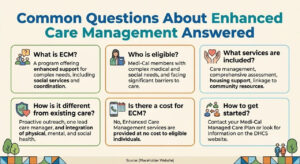
Enhanced Care Management through CalAIM assigns a dedicated care manager who coordinates across every dimension of a person’s life, health, mental health, housing, social services, and daily functioning. It is designed for people with the most complex needs, the ones who are falling through the cracks of every other system, and it is available at no cost to eligible Medi-Cal members in Solano County.
Solano Impact Care provides ECM services in Solano County, delivered by a team with lived experience navigating the same complexity their clients are facing. If daily functioning has broken down for you or someone you love, this is exactly the kind of support that can help stabilize things and create a path forward.
Sign Seven: Your Gut Has Been Telling You Something Is Wrong
This one is less clinical than the others, but it is real and it is worth naming.
Family members and close friends of people in recovery often develop a kind of intuition about when something is off. They notice changes in behavior, shifts in mood, patterns that feel familiar from before. They sense that something is wrong before they can articulate exactly what it is.
That intuition is worth taking seriously.
If you have been watching someone you love and something in you keeps saying this is not okay, that feeling is data. You do not need a checklist of clinical symptoms to justify getting someone evaluated. You do not need to wait until things get dramatically worse before making a call.
For people in recovery themselves, the same applies. If something in you knows that what you are doing is not working, that the support you have is not enough for what you are carrying right now, that feeling deserves to be honored with action.
Getting a professional assessment does not commit anyone to anything. It gives you information. And information, in the context of recovery and mental health, is always better than waiting and hoping.
What to Do If You Recognize These Signs
If several of these signs feel familiar, the next step is getting connected to someone who can help assess what level of care is actually needed and make sure it is accessible.
Solano Impact Care serves Medi-Cal members in Solano County who have complex needs, including people whose current level of support is not working. Their care managers can help identify what is going on, coordinate across systems, and connect people to the right level of care, whether that is Enhanced Care Management, inpatient treatment, psychiatric support, housing, or a combination of all of them.
The team at Solano Impact Care includes people who have personally navigated moments exactly like the ones described in this article. They have been at the point where what they were doing was not enough and they needed something more. That experience means they recognize these signs not just professionally but personally, and they know how to help someone move from recognition to action without shame or judgment.
Call (707) 301-4051 or email care@solanoimpactcare.org to get connected. If you or someone you love is in immediate crisis, call or text 988 or go to your nearest emergency room.
You do not have to wait until things get worse. Getting help sooner is always better than waiting to see how bad it gets.