
When a child is removed from their home by Child Protective Services, it is one of the most devastating things a family can experience. For the parent, it can feel like the ground has completely disappeared. For the child, it means being somewhere unfamiliar, separated from the person they depend on most. For everyone involved, it is a crisis that demands an immediate response.
What many parents in this situation do not know is that the California child welfare system is legally required, in most cases, to work toward bringing families back together. Family reunification is not just a hope. It is a structured legal process with defined steps, timelines, and services designed specifically to help parents address whatever led to their child’s removal and demonstrate that their home is safe.stain long term.
Understanding how that process works is one of the most important things a parent can do. Because the families who reunify successfully are almost always the ones who understood what was being asked of them, started working on it immediately, and got the right support alongside them.
This article explains what family reunification is, how the process moves through California’s courts, what is required of parents, and where to get help in Solano County.
What Family Reunification Actually Means
Family reunification is the process of reconnecting children in out-of-home care with their families by providing intensive services to address the issues that brought the children into the child welfare system in the first place.
It is not just a concept. In California, it is a legal framework with its own statute. Under California’s Welfare and Institutions Code Section 300, family reunification services are court-mandated services aimed at facilitating the safe reunification of a child with their parents or legal guardians after a CPS intervention.
The foundation of California family law is the presumption that keeping families together is in the child’s best interest whenever it is safe to do so. The law does not assume that parents who have made serious mistakes are permanently unfit. It assumes that most families can be repaired with the right services, time, and accountability.
That presumption shapes everything about how the reunification process is designed. It is built to give parents a real opportunity to demonstrate change, not to permanently separate families at the first sign of crisis.
When Reunification Services May Not Be Offered
Before walking through the standard process, it is important to know that there are situations where the court may bypass reunification services entirely and move directly toward finding a permanent alternative placement for the child.
Reunification services may not be offered if:
- A parent has a history of severe abuse, including abuse that resulted in the death of a sibling
- A parent has a prior failed reunification case
- A parent has been convicted of specific violent crimes
- A parent has serious untreated drug or psychiatric problems that are not being addressed
In those situations, the court can move directly toward permanency planning, which includes options such as adoption, legal guardianship, or long-term foster placement.
If you are unsure whether you are eligible for reunification services, a dependency court attorney can review your specific case. In California’s juvenile dependency system, parents have the right to an attorney, and one will be assigned to you at the first court hearing if you do not have one.
How the Process Moves Through Court: Step by Step
The California juvenile dependency process moves through several defined stages. Understanding these stages helps parents know where they are, what is coming next, and how to stay ahead of the timeline.
Stage One: Emergency Removal and Detention Hearing
The process begins when CPS determines that a child needs to be removed from the home due to immediate safety concerns. After the removal, CPS must petition the court, and the court must hear that petition by the end of the next business day.
The detention hearing decides whether the child’s removal was necessary and whether the child should remain in temporary out-of-home placement while the case proceeds. At this stage the child may be placed with a safe relative, a family friend, a resource family, or in foster care.
Stage Two: Jurisdictional Hearing
Within 15 to 30 days of the removal, a jurisdictional hearing takes place. This is where the court decides whether the allegations in the CPS petition are true. This hearing is also the parent’s opportunity to respond to those allegations.
Stage Three: Disposition Hearing
The dispositional hearing is held within 30 days in most cases. This is one of the most critical stages. The judge decides whether the child will become a dependent of the court, where the child will be placed, what visitation looks like, and most importantly, what the reunification plan will require.
The reunification plan is the document that defines the parent’s path back to their child. It is developed by the social worker with the parent’s input and ordered by the judge. It outlines the specific services and steps the parent must complete to demonstrate that their home is safe for the child to return to.
Stage Four: The Reunification Period
This is the longest phase of the process. It is the period during which the parent works the case plan, the child remains in placement, and the court reviews progress at six-month intervals.
Reunification services are presumed to last 12 months for children under three at the time of removal, and 18 months for children three and older. For children under three, the timeline is shorter and the stakes are higher, which is why beginning services immediately after the disposition hearing is so critical.
At every six-month review, the court asks two primary questions: Has the parent made substantive progress on the case plan? Is there a substantial probability that the child can be safely returned by the next review? The answers to those questions determine whether the case continues toward reunification or shifts toward a permanent alternative plan.
Stage Five: Reunification or Permanency Planning
If the parent successfully completes the case plan and demonstrates that the issues leading to removal have been resolved, the court moves toward reunification. Custody is typically restored gradually, beginning with supervised visits, moving to unsupervised time, then overnights, and eventually full return of the child to the parent’s care.
At the end of a successful reunification case, the court will issue what is called an exit order, which creates a custody and visitation structure for the future.
If reunification is not achieved within the statutory timeframe, the court must make a permanent plan for the child. That plan can include adoption, legal guardianship, or another long-term arrangement. The 18-month hearing is generally the family’s last chance for reunification.
What the Reunification Plan Typically Requires
The specific requirements of a reunification plan vary depending on the circumstances of each case. They are meant to directly address whatever issues led to the child’s removal. Common components include:
- Substance abuse treatment and ongoing drug testing if substance use was a factor
- Individual therapy or counseling to address mental health needs
- Parenting classes, which are among the most commonly ordered requirements
- Domestic violence programs if relevant to the case
- In-home coaching to work through specific parenting challenges
- Participation in AA, NA, or other sobriety support programs
- Securing safe and stable housing appropriate for the child
- Maintaining consistent, appropriate visitation with the child
- Employment or demonstrated ability to meet the child’s basic needs
- Regular communication with the assigned social worker
The judge will order you to complete all the reunification services. You should immediately begin participating in those services because you have to complete all of them to get your child back and you have a limited amount of time to do it.
That last point is one of the most important things to understand about the reunification process. The deadlines begin on the date of the child’s removal, not when the parent starts participating. If you delay services or miss court hearings, you may lose precious time in the reunification window.
What the Court Is Actually Looking For
Throughout the reunification process, the court is trying to answer one central question: can this parent provide a safe, stable, and nurturing environment for their child now and going forward?
Everything in the case plan is designed to help the parent demonstrate the answer to that question is yes. But it is not just about completing boxes on a checklist. Courts and social workers are looking for genuine, sustained change, not compliance performed right before a court date.
The single biggest predictor of success at reunification is documentation. Keep every certificate of completion. This means holding onto every piece of paper that proves you did what you were asked to do. Treatment completion certificates, drug test results, attendance records for parenting classes, proof of stable housing, and records of every visitation you attended all become evidence that builds your case over time.
Equally important is staying in consistent communication with your social worker and your attorney. It is important to keep in touch with your attorney and social worker to keep them up to date on your progress toward your reunification goals. Social workers file reports before every review hearing, and those reports carry significant weight with the judge. Making sure your social worker has an accurate picture of your progress is essential.
Why Stable Housing Is Central to Reunification
One of the requirements that trips up parents most consistently is housing. The court needs to know that the child will have a safe, appropriate place to live before reunification can happen. For parents coming out of incarceration, active addiction, or a period of homelessness, securing housing that meets that standard is one of the hardest parts of the process.
This is exactly the gap that transitional housing programs exist to fill. For mothers in Vallejo and across Solano County, Hazel’s Tranquility Place offers transitional housing, sober living, and aftercare support specifically designed for vulnerable women and children working toward family stability.
Hazel’s Tranquility Place was founded in 2019 by K. Patrice Williams after she witnessed firsthand the serious gaps in housing and programming for women and children in Solano County during her campaign for Solano County Supervisor. The organization was built specifically because women in crisis needed more than a bed. They needed a structured, supportive environment where sobriety, stability, and family reunification could all happen at once.
Having a documented, stable address in a structured program is not just a personal relief during the reunification process. It is concrete evidence for the court that you are building the foundation your child needs. Learn more at hazelstranquility.org.
The Role of Substance Use Treatment in Reunification
For many families involved in the California dependency system, substance use played a direct role in why the child was removed. If that is true in your case, your recovery is not just personally important. It is legally central to your path back to your children.
Courts are looking for sustained recovery, not a single moment of sobriety. That typically means completing a formal treatment program, consistent clean drug test results over time, ongoing participation in a recovery support community, and engagement with a therapist or counselor addressing the underlying causes of the substance use.
As we covered in the article on How to Regain Custody of Your Children After Addiction or Incarceration, a parent who shows steady, documented progress over time builds a far stronger case than one who tries to demonstrate sudden dramatic change right before a court date. Consistency is what courts trust, because consistency is what children need.
It is also worth knowing that a relapse during the reunification process does not automatically end your case. What matters most is how quickly you return to treatment and support. As we explored in the article on What to Do When Someone You Love Relapses, a relapse is a setback, not a permanent verdict. Getting back into support immediately and being honest with your social worker and attorney demonstrates exactly the kind of accountability that courts and case workers are ultimately looking for.
Getting Legal Representation
Navigating the dependency court system without legal representation puts parents at a serious disadvantage. The process is complex, the timelines are strict, and the stakes are the highest they can be.
In California’s juvenile dependency system, parents have the right to an attorney. If you cannot afford one, a court-appointed attorney will be assigned to you at your first hearing. Take that right seriously. An experienced dependency attorney can help you understand what your specific case plan requires, push back on unnecessary services, and advocate effectively for your progress at every review hearing.
For additional guidance on the California court process for parents, the California Courts Self-Help Guide at selfhelp.courts.ca.gov provides plain-language information on every stage of the dependency process, including what to expect at each hearing and what your rights are as a parent.
How Solano Impact Care Supports Families Through This Process
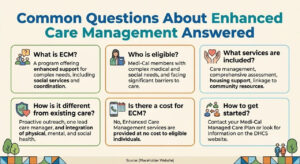
For Medi-Cal members in Solano County, Solano Impact Care provides Enhanced Care Management and Community Supports that can make a meaningful difference in how manageable the reunification process feels. A care manager can help coordinate across treatment, housing, mental health services, and social supports, making sure the pieces of your case plan are connected rather than each one being something you have to chase down separately.
What makes Solano Impact Care’s support particularly relevant for parents going through reunification is who is doing that work. The team includes people who have personally navigated incarceration, substance use, mental health crises, and the process of rebuilding family relationships after addiction. They understand the reunification process not just administratively but from lived experience. That understanding creates a level of trust and authentic support that is hard to find anywhere else.
Their approach is built around empowering personal transformation across physical health, mental health, and social support, addressing the systemic barriers that make the reunification process harder than it needs to be, and walking alongside clients rather than just pointing them in a direction.
To get connected, call Solano Impact Care at (707) 301-4051 or email care@solanoimpactcare.org.
A Note on Legal Advice
Custody and dependency law is complex and highly specific to individual circumstances. This article is meant to provide general information about how the California family reunification process works, not legal advice. Anyone navigating a dependency case should work directly with a qualified dependency attorney for guidance specific to their situation.
You Have Time, But Not Unlimited Time
The California family reunification process is built around the belief that families can heal and that children belong with their parents whenever that is safe. But it is also time-sensitive in ways that demand immediate, consistent action.
The parents who reunify successfully are almost never the ones who waited to see what happened. They are the ones who started on day one, who showed up to every hearing, who completed every requirement, who kept every document, and who got the support they needed to stay on track through a long and demanding process.
If you are at the beginning of this process, or somewhere in the middle of it, the most important thing you can do right now is start, or keep going. Get into the services. Stay in contact with your attorney and social worker. Document everything. And get the right support around you.
Your child needs you to show up. And the system, for all its difficulty, is designed to give you the chance to do exactly that.
References:
California Department of Social Services. Family Reunification and Pathways to Permanency. https://cdss.ca.gov/inforesources/cdss-programs/foster-care/family-reunification-and-pathways-to-permanency
California Welfare and Institutions Code § 300.
https://leginfo.legislature.ca.gov/faces/codes_displaySection.xhtml?sectionNum=300.&lawCode=WIC
California Courts Self-Help Center. Juvenile Dependency. https://selfhelp.courts.ca.gov/juvenile-dependency