
Trust is one of the quietest casualties of addiction. It does not break all at once. It erodes slowly, through broken promises, missed moments, lies told to protect the habit, and the particular kind of pain that comes from loving someone who keeps choosing something else over you. By the time a person gets into recovery, the damage to family relationships can feel so deep that rebuilding seems almost impossible.
It is not impossible. But it is also not simple, and it is not fast. Rebuilding trust after addiction is one of the most meaningful and most demanding parts of the recovery journey. It requires honesty, patience, consistency, and the willingness to keep showing up even when the response you get is not what you hoped for.
This guide walks through what that process actually looks like, step by step, for the person in recovery and for the family members trying to figure out how to respond.
Why Trust Breaks the Way It Does in Addiction
Before talking about how to rebuild trust, it helps to understand why it breaks the way it does. Because the kind of trust damage that addiction causes is specific, and healing it requires understanding what actually happened.
Addiction changes behavior in ways that consistently violate the foundations of trust. These include:
- Dishonesty: Hiding use, lying about whereabouts, minimizing the extent of the problem, and making promises that are not kept become patterns that family members learn to expect even when they desperately hope to be wrong.
- Unpredictability: When a person’s behavior depends on whether or how much they have used, the people around them never know which version they are going to get. That unpredictability is exhausting and creates a constant state of low-level anxiety in family members.
- Broken commitments: Missed birthdays, school events, dinners, and conversations that never happened. Over time these pile up into a body of evidence that the person in addiction cannot be counted on.
- Financial harm: Money borrowed and not returned, bills not paid, savings depleted, and sometimes theft. Financial violations carry their own particular weight because they mix betrayal with material consequence.
- Emotional unavailability: Even when physically present, a person in active addiction is often emotionally absent. Family members learn to stop expecting real connection, which is a form of grief that does not always get named.
Family members develop protective responses to these patterns. They stop sharing things. They stop expecting follow-through. They brace for disappointment. They build walls, not out of cruelty, but out of self-preservation. Those walls do not come down just because the person gets sober. They come down slowly, over time, through repeated experiences of things being different.
Step One: Get Honest Before Asking for Anything
The first and most important step in rebuilding family trust has nothing to do with what your family does. It has everything to do with where you start from yourself.
Before asking your family to trust you again, the work begins with radical honesty. Not just acknowledging that you struggled with addiction, but being genuinely honest about the specific ways your behavior affected the people around you.
This is harder than it sounds. It requires sitting with the full weight of what happened without minimizing, deflecting, or rushing to explain it away. It requires resisting the urge to immediately pivot to how things are different now before the people you hurt have had the chance to feel heard about what they experienced.
Some questions worth sitting with honestly before approaching family:
- What specific promises did I break?
- What moments did I miss that cannot be recovered?
- What did I lie about, and for how long?
- What financial harm did I cause?
- What did my children, partner, or parents carry because of my addiction that they should not have had to carry?
This is not an exercise in self-punishment. It is the foundation of genuine accountability, which is what makes real trust possible. A general apology for being in addiction does not rebuild trust. Specific, honest acknowledgment of real harm is what begins to move things.
Step Two: Make Amends That Are Actions, Not Just Words
Apologies matter. But in the context of addiction recovery, words have often been used and then violated so many times that they carry less weight than they once did. The people you love have likely heard “I’m sorry” and “things are going to be different” more times than they can count.
What rebuilds trust is not what you say. It is what you do, consistently, over time, when no one is watching and no one is giving you credit for it.
Making amends in a meaningful way looks like:
- Acknowledging specific harm to specific people directly and without making excuses
- Following through on commitments even when it is inconvenient
- Returning money where possible, or making a genuine plan to do so
- Being present at the things you said you would show up for
- Handling conflict without reverting to old patterns of avoidance, deflection, or manipulation
- Not expecting forgiveness on a timeline that suits you
That last point deserves its own emphasis. Forgiveness belongs to the person who was hurt. It is not something you can request or schedule. Your job is to keep showing up with consistent behavior. What your family does with that is their own process, and it is one you have to respect even when it is painful to wait.
Step Three: Understand That Your Family Is Healing Too
One of the most important shifts a person in recovery can make is recognizing that their family members are not just bystanders waiting to see if the recovery holds. They are people who went through something significant, and they are in their own process of healing from it.
Living with someone in active addiction is traumatic. It creates hypervigilance, anxiety, chronic stress, and a kind of emotional exhaustion that does not lift the moment sobriety begins. Family members may have developed their own depression, their own unhealthy coping strategies, their own walls and patterns that served them during the hard years and now need to be examined.
As we covered in the article on How to Support a Loved One in Recovery Without Burning Out, the people who love someone in addiction carry a weight that is real and that deserves its own support. Recognizing this as the person in recovery means:
- Not interpreting your family’s caution as a personal attack
- Not requiring them to perform trust before they genuinely feel it
- Giving them space to have their own feelings without making those feelings about you
- Supporting them in getting their own support, whether through therapy, support groups, or other resources
- Understanding that their healing may move on a different timeline than yours
When a person in recovery can hold space for their family’s healing process rather than centering only their own, the dynamic shifts in a way that genuinely opens the door to restored relationship.
Step Four: Rebuild Through Consistency, Not Grand Gestures
This is the step that most people underestimate. There is often a desire to do something significant, something that demonstrates how serious the commitment to recovery is and how deeply the harm is regretted. A grand gesture, a big moment, a dramatic demonstration.
Grand gestures do not rebuild trust. Consistency does.
Trust is rebuilt through the accumulation of ordinary moments where you do what you said you would do. Where you show up when you said you would. Where you tell the truth when a small lie would be easier. Where you handle a hard day without reaching for the old coping strategies. Where you answer the phone, pay the bill, attend the meeting, and stay present through the difficult conversation.
These things seem small individually. Over time they become the evidence that something has genuinely changed. That evidence is what eventually allows a family member to lower their guard, not because they decided to trust you, but because your behavior gave them something real to trust.
A practical list of consistency-builders that matter in family trust repair:
- Keeping every commitment you make, no matter how small
- Communicating proactively rather than waiting to be asked
- Showing up to family events and staying present while there
- Following through on financial commitments exactly as agreed
- Being transparent about your recovery without being asked to account for every moment
- Maintaining your recovery program visibly and consistently
- Handling conflict with honesty rather than avoidance
Step Five: Communicate Differently Than You Did Before
Addiction tends to produce unhealthy communication patterns on all sides. The person in addiction develops patterns of minimizing, deflecting, and avoiding. Family members develop patterns of walking on eggshells, saying what they think will keep the peace, or swinging to the other extreme of explosive confrontations after long periods of suppression.
Recovery asks everyone to communicate differently. That does not happen automatically. It usually requires intention, practice, and in many cases, support from a therapist or counselor who can help the family develop new patterns together.
Some communication practices that help in this process:
- Say what you mean and mean what you say: Avoid the habit of hedging, softening everything to the point where nothing is clear, or making promises you are not certain you can keep.
- Listen to understand, not to respond: When a family member expresses pain or frustration, the goal is to hear them fully before thinking about how to respond. Jumping immediately to defense or explanation shuts down the conversation before it has started.
- Name what you are feeling in the moment: Rather than letting things build to a breaking point, practice identifying and naming emotions as they arise. This is a skill that takes time to develop and is worth developing.
- Repair quickly after conflict: Recovery from a difficult conversation matters. Coming back to acknowledge what went wrong and how you would have handled it differently shows a level of relational maturity that builds trust over time.
Step Six: Get Professional Support for the Family, Not Just the Individual
Individual recovery work is essential. But some of the most significant breakthroughs in family trust rebuilding happen in a structured space where everyone involved has the chance to speak honestly and be heard without the conversation derailing.
Family therapy, whether with a licensed therapist or through a structured family program offered by a recovery organization, provides that space. It creates conditions where things that are too painful to say at the kitchen table can be said with support, where misunderstandings can be clarified, and where new patterns of relating can be practiced with a skilled person facilitating.
Support groups specifically for families, such as Al-Anon and Nar-Anon, also offer something important. They connect family members with other people who understand this specific kind of experience, reduce isolation, and provide perspective that is hard to get when you are inside the situation.
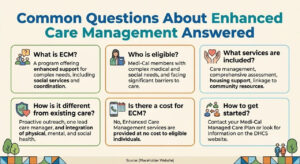
For families in Solano County navigating this process, Solano Impact Care provides Enhanced Care Management that coordinates support across health, mental health, and social services. Their team brings something that most clinical providers cannot offer: lived experience with the exact dynamics they are helping families navigate. When a care manager has personally rebuilt trust with their own family after addiction or incarceration, the guidance they offer is grounded in something real.
As described on the Solano Impact Care website, the team has faced homelessness, incarceration, grief, loss, mental health challenges, and struggles with substance use. That shared experience allows them to connect with clients on a deeper level, offering empathy, understanding, and hope that is not abstract or clinical but genuinely earned.
Step Seven: Know That Some Relationships Take Longer Than Others
Not every family relationship will heal on the same timeline, and some may need more time than others before real repair is possible. A parent who watched their child spiral for a decade carries different wounds than a sibling who was less directly affected. A partner who managed the household, raised the children, and covered for the addiction through years of chaos has a different road to travel than a friend who drifted away during the worst of it.
Recognizing this means:
- Not pressuring every family member to be in the same place at the same time
- Accepting that some people may need to maintain more distance for longer
- Allowing relationships to rebuild at their own pace rather than forcing a timeline
- Continuing to show up consistently even when progress feels slow or invisible
There may also be relationships where the damage is extensive enough that full repair takes years, or where a family member chooses to maintain a different kind of relationship than the one that existed before. That is painful. It is also a consequence of what happened, and sitting with that honestly is part of accountability.
What matters is that you remain committed to doing your part, not because it guarantees a specific outcome, but because it is right and because the people you love deserve the consistent version of you that recovery makes possible.
The Bottom Line
Rebuilding family trust after addiction is not a single conversation or a single moment. It is a process that unfolds over time through consistent, honest, accountable behavior combined with genuine support for everyone involved in the healing.
The steps outlined here are not a checklist to complete and cross off. They are practices to return to repeatedly, sometimes starting over after a setback, sometimes moving forward slowly in ways that are hard to see from the inside.
What makes it possible is the same thing that makes recovery itself possible: the decision to keep showing up, even when it is hard, even when the response is not what you hoped for, even when the finish line feels impossibly far away.
At Solano Impact Care, the team walking alongside you through this process is made up of people who have done this work themselves. They are proof that trust can be rebuilt, that families can heal, and that the relationship damage left by addiction is not the final word on who you are or what your family can become.
To get connected with support in Solano County, call (707) 301-4051 or email care@solanoimpactcare.org.