Making the decision to get sober is one of the most important choices a person can make. But what happens next is where many people struggle. You finish a treatment program, leave a detox facility, or decide on your own that you are done with the lifestyle that was destroying you, and then you are faced with a question that does not have an easy answer: where do you go from here?
Research consistently shows that the environment a person returns to after treatment has a significant impact on whether they stay sober or relapse. That is not a character flaw. It is just how recovery works.
Sober living exists to address that gap. It is a structured, substance-free living environment designed to bridge the space between formal treatment and fully independent life. It gives people the time, stability, and community they need to build a real foundation for long-term recovery.
This article breaks down what sober living actually is, how it works, who it is right for, and what to look for when choosing a home.
What is Sober Living?
A sober living home is a shared residence where all residents are committed to staying substance free. It is not a treatment facility and it is not a detox center. There are no doctors on staff and no clinical programming happening on site. What it does provide is a stable, accountable, and supportive living environment during one of the most vulnerable periods in a person’s recovery.
Most sober living homes operate with a set of house rules that all residents agree to follow. These rules exist to protect the environment for everyone living there. They typically include:
- Zero tolerance for alcohol and drugs on the premises
- Regular drug and alcohol testing
- A curfew, especially in early residency
- Required attendance at house meetings
- Participation in a recovery program such as Alcoholics Anonymous, Narcotics Anonymous, or another structured support group
- Contribution to household responsibilities like chores
- Payment of weekly or monthly rent
- Respectful behavior toward other residents and staff
The structure is intentional. One of the things addiction does is strip away routine, accountability, and healthy habits. Sober living rebuilds those things gradually in a low-pressure environment before a person is expected to manage all of it completely on their own.
How Sober Living Differs From Inpatient Treatment
This is a distinction worth being clear about because people sometimes confuse the two or assume sober living is just another name for rehab.
Inpatient treatment is a clinical setting. Residents typically participate in therapy sessions, medical supervision, group programming, and structured daily schedules designed and managed by clinical staff. It is intensive by design because it is meant to address the acute phase of addiction and begin the work of recovery in a controlled environment.
Sober living is what comes after. It is residential, meaning you live there, but you are not a patient. You are a resident. You are expected to take increasing responsibility for your own life, including finding work, attending appointments, managing finances, and building a daily routine, while still having the safety net of a substance-free home and a community of people who understand what you are going through.
The key differences look like this:
- Inpatient treatment is clinical, short-term, and intensive. Sober living is residential, longer-term, and transitional.
- Inpatient treatment is supervised by medical and clinical professionals. Sober living is managed by house managers or staff who are often in recovery themselves.
- Inpatient treatment covers nearly every aspect of your day. Sober living gives you structure while gradually returning autonomy to you.
- Inpatient treatment typically lasts 30, 60, or 90 days. Sober living can last anywhere from a few months to over a year depending on the individual.
Who Sober Living Is Right For
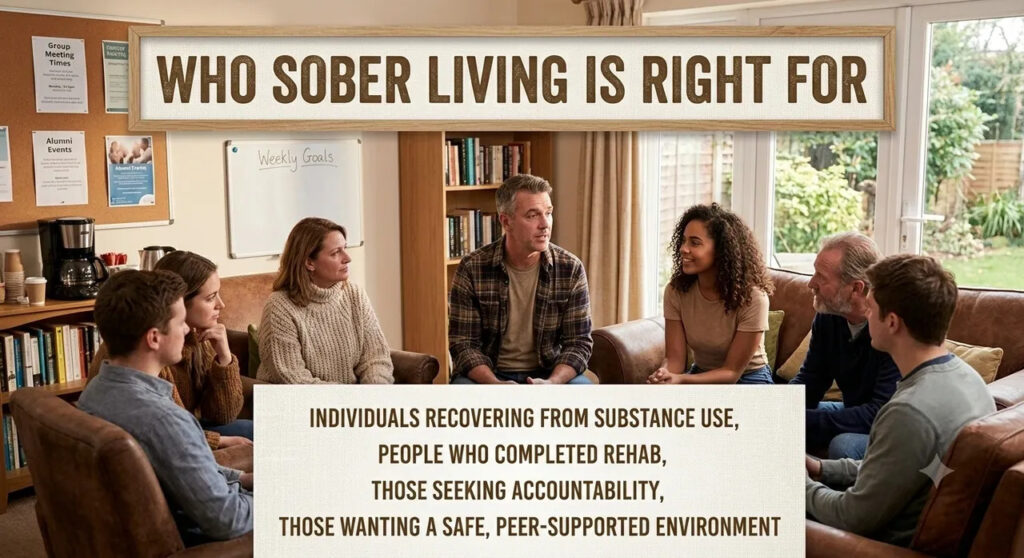
Sober living is not for everyone at every stage of recovery. It tends to work best for people in specific situations.
You might be a good fit for sober living if:
- You have recently completed an inpatient or outpatient treatment program and are not ready to live independently
- You are in early recovery and know that your current home environment puts your sobriety at risk
- You are leaving incarceration and need a stable, substance-free place to land while rebuilding your life
- You are a woman or mother in a vulnerable situation who needs safe housing alongside recovery support
- You have relapsed before and recognize that environmental triggers were a major factor
- You want peer accountability and community support as part of your recovery but do not need clinical care
- You are working on getting back on your feet financially, professionally, or socially and need time and stability to do it
Sober living is not a good fit if a person is still in acute withdrawal or in need of medical supervision. In that case, detox or inpatient treatment is the appropriate first step before transitioning to a sober living environment.
What Life in a Sober Living Home Actually Looks Like
People sometimes imagine sober living as a place with rigid rules and very little freedom. The reality is more nuanced. The structure is there, but most homes are designed to feel like a real home, not an institution.
A typical day in a sober living home might look like this:
- Waking up and completing household responsibilities before leaving for the day
- Attending work, job training, school, or appointments during the day
- Coming home before curfew in the evening
- Attending a weekly house meeting with other residents
- Going to a recovery support group meeting several times a week
- Participating in shared meals or community time with housemates
The social element is one of the things residents often say they value most. Living alongside other people who are in recovery, people who understand the daily work it takes and are doing it themselves, creates a kind of peer accountability and mutual support that is hard to replicate anywhere else.
It also reduces isolation, which is one of the most significant risk factors for relapse. Recovery is much harder to sustain alone. Sober living addresses that directly by putting you in community with people who are doing the same work.
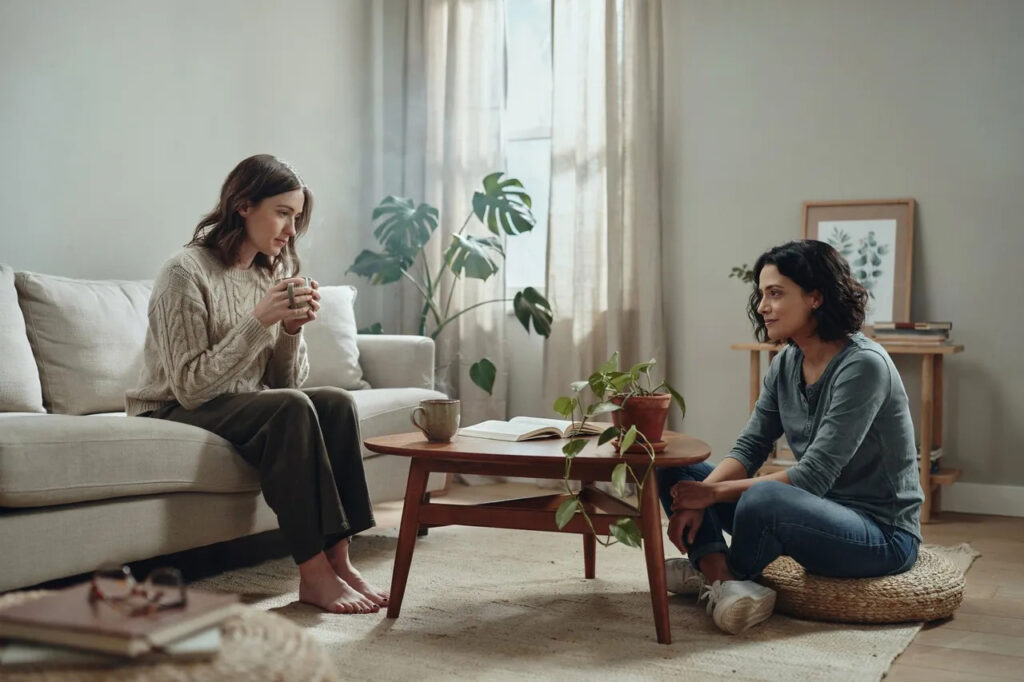
Sober Living for Women and Families in Solano County
For women, and especially for mothers, the path through recovery has unique layers. Many women in recovery are also navigating the process of rebuilding relationships with their children, dealing with trauma, managing the emotional weight of family separation, and trying to establish safe housing, all at the same time.
Generic sober living homes do not always meet those needs well. Women often benefit from an environment specifically designed for their situation, one that understands the complexity of what they are navigating and provides support that goes beyond just sobriety.
Hazel’s Tranquility Place, located in Vallejo, is exactly that kind of resource. Founded in 2019 by K. Patrice Williams while she was running for Solano County Supervisor, Hazel’s Tranquility Place was created because Williams saw firsthand the gaps in housing and programming for women and children in Solano County. What she witnessed during that campaign made clear that there was a serious need for a safe, supportive space where vulnerable women and children could find stability, work toward sobriety, and begin the process of family reunification.
Hazel’s Tranquility Place provides transitional housing, sober living, and aftercare support for women and children in Vallejo and across Solano County. It is a place where mothers can stabilize their lives in a structured, compassionate environment while working toward getting back to their children or keeping the family unit intact.
You can learn more and get connected at hazelstranquility.org.
What to Look For in a Sober Living Home
Not all sober living homes operate the same way. The quality, structure, and culture of a home can vary significantly, and choosing the right one matters. Here are the things worth paying attention to when evaluating a sober living home:
Clear and consistently enforced rules
A home where rules are selectively enforced or routinely ignored is not actually a safe recovery environment. The structure has to be real.
Staff or house managers with experience in recovery
Homes run by people who understand recovery from the inside tend to create better environments than those managed purely from an administrative standpoint.
A requirement to participate in a recovery program
A sober living home that does not require residents to be actively engaged in AA, NA, or another recognized recovery program is missing one of the core elements that makes sober living effective.
A community that is genuinely supportive
Talk to residents if you can. Pay attention to whether the atmosphere feels safe and whether people are actually looking out for each other.
A clear path toward independence
Good sober living homes are not designed to keep you there indefinitely. They are designed to help you build toward independent, sustainable living. Ask what that progression looks like.
Transparency about costs
Most sober living homes charge rent. That is normal and reasonable. What should concern you is any home that is not upfront about costs or that has financial arrangements that feel unclear or exploitative.
How Long Should You Stay?
This is one of the most common questions people have, and the honest answer is that it depends on the individual. There is no universal timeline for sober living. Some people stay for three months. Others stay for a year or more.
What matters more than a fixed timeline is whether you are making genuine progress toward the things that will support your long-term recovery: stable employment or income, healthy relationships, consistent participation in a recovery program, and the practical skills to manage daily life on your own.
Leaving sober living before you have those foundations in place increases the risk of relapse significantly. Staying longer than you need to can sometimes delay the growth that comes from taking on full independence.
The right time to leave is when you feel genuinely ready, when your support network outside the home is solid, and when your recovery program is something you are doing consistently without the structure of the house holding you to it.
Combining Sober Living With Other Supports
Sober living works best when it is part of a broader recovery plan rather than a standalone solution. The most successful outcomes tend to happen when sober living is combined with:
- Active participation in a 12-step or other recovery support program
- Individual therapy or counseling to address underlying trauma and mental health
- Care management services that coordinate across health and social needs
- Employment support or job training to build financial stability
- Community connection that extends beyond the sober living home itself
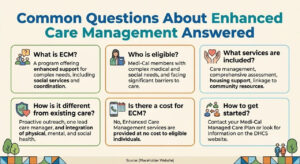
Solano Impact Care provides Enhanced Care Management and Community Supports for Medi-Cal members in Solano County, including people in recovery who need coordinated support across housing, health, and social services. As we discussed in the article on How CalAIM Is Changing Healthcare for Low-Income Californians, these services are available at no cost to eligible Medi-Cal members and can make a significant difference in helping people sustain their recovery long term.
If you or someone you love is navigating recovery in Solano County and wants to understand what support is available, reach out to Solano Impact Care at (707) 301-4051 or email care@solanoimpactcare.org.
Recovery Is Possible, and You Do Not Have to Do It Alone
Sober living is not a perfect solution and it is not the right fit for every person at every stage. But for people in early recovery who need time, structure, community, and a safe environment to rebuild their lives, it can be genuinely life-changing.
The transition from active addiction to stable independent living is one of the hardest things a person can navigate. Sober living exists to make that transition more survivable, more supported, and more likely to stick.
If you are considering sober living for yourself or someone you love, the most important thing is to start the conversation. Reach out to a local organization, ask questions, and find out what options exist in your area. Help is available, and recovery is possible.