A lot of people in Solano County are running on empty right now. Not in crisis exactly, but not okay either. Waking up already tired. Getting through the day while something heavy sits on their chest that never quite lifts. Psychologists call it survival mode, and it happens when the nervous system has been under so much sustained stress that it stops knowing the difference between a real emergency and just a Tuesday.
Anxiety and depression live in that space. They are two of the most common and most undertreated mental health conditions in the country, especially in communities dealing with economic pressure, housing instability, and the long tail of addiction and incarceration.
If any of that sounds familiar, this article is for you. Here is what these conditions actually look like, why they are so hard to address alone, and what real help looks like in Solano County.
What Anxiety Actually Is
Anxiety is one of the most misunderstood mental health conditions because the word is used so casually in everyday conversation. Saying you are anxious about a job interview or a difficult conversation is not the same as living with an anxiety disorder. The distinction matters because it affects whether people recognize what they are experiencing as something that deserves and can benefit from real support.
Clinical anxiety is a persistent, often disproportionate state of worry, fear, or dread that interferes with daily functioning. It is not just feeling nervous before something stressful. It is feeling like something terrible is about to happen even when nothing specific is wrong. It is a mind that cannot stop running through worst-case scenarios. It is a body that responds to ordinary situations with a physical stress response, racing heart, shallow breathing, muscle tension, that was designed for genuine emergencies.
Anxiety disorders include several specific conditions:
- Generalized Anxiety Disorder, which involves persistent, excessive worry about a wide range of everyday situations
- Social Anxiety Disorder, which involves intense fear of social situations and judgment by others
- Panic Disorder, which involves recurrent panic attacks and fear of future attacks
- Post-Traumatic Stress Disorder, which involves anxiety responses triggered by past traumatic experiences
- Specific phobias, which involve intense fear responses to particular situations or objects
For people who have experienced trauma, incarceration, homelessness, or long-term substance use, PTSD-related anxiety is particularly common. The nervous system has been trained by genuine danger, and it does not easily unlearn that training just because the immediate danger has passed.
What Depression Actually Is
Depression is similarly misunderstood. Feeling sad after a loss or a hard day is a normal human experience. Clinical depression is something different. It is a persistent condition that affects how a person thinks, feels, and functions across every area of their life, often without an obvious external cause.
Depression does not always look like sadness. Sometimes it looks like numbness, like the feeling of being cut off from your own emotions and from things that used to bring pleasure. Sometimes it looks like irritability, snapping at people for reasons that seem disproportionate. Sometimes it looks like exhaustion so deep that getting out of bed feels genuinely impossible. Sometimes it looks like withdrawal, pulling away from relationships and activities not because you want to be alone but because connection feels too effortful.
Common symptoms of depression include:
- Persistent low mood or emptiness that does not lift
- Loss of interest or pleasure in activities that previously brought enjoyment
- Significant changes in sleep, either sleeping too much or being unable to sleep
- Changes in appetite and weight
- Fatigue and low energy that does not improve with rest
- Difficulty concentrating, making decisions, or remembering things
- Feelings of worthlessness or excessive guilt
- In more severe cases, thoughts of death or suicide
What Survival Mode Does to Mental Health
Survival mode is not a clinical diagnosis. It is a description of a state that precedes and produces clinical conditions if it goes unaddressed long enough.
When a person has been living under sustained stress, whether from poverty, housing instability, domestic violence, incarceration, addiction, or the accumulated weight of a life with more hardship than support, the nervous system adapts. It stays in a heightened state of alert because that alertness has been necessary for survival. The problem is that this adaptation, which is genuinely protective in dangerous situations, becomes harmful when it persists beyond those situations.
Living in survival mode long-term produces:
- Chronic elevated cortisol, the body’s primary stress hormone, which damages physical health over time
- Difficulty experiencing positive emotions, because the nervous system is focused on threat detection rather than pleasure
- Impaired decision-making and impulse control, because the prefrontal cortex, the brain’s planning and reasoning center, is less active when the survival brain is running the show
- Sleep disruption, because the body cannot safely enter deep rest when it believes danger is present
- Relationship difficulties, because hypervigilance and emotional reactivity make genuine connection harder
- Physical health problems including chronic pain, digestive issues, cardiovascular strain, and immune suppression
Over time, chronic survival mode tends to crystallize into clinical anxiety, clinical depression, or both. The person who has been running on stress hormones for years eventually hits a wall, and that wall has a clinical name.
Understanding this helps explain why people who have been through significant hardship are not just dealing with bad circumstances. They are dealing with a nervous system that has been shaped by those circumstances in ways that require real, sustained support to address, not just willpower and positive thinking.
Why People in Solano County Often Do Not Get Help
The gap between how many people in Solano County are dealing with anxiety and depression and how many are receiving adequate treatment is significant. Understanding why that gap exists helps explain what needs to change.
Stigma: Mental health stigma remains a serious barrier, particularly in communities where strength and self-sufficiency have been survival requirements. Admitting to anxiety or depression can feel like weakness in environments where weakness has historically had real consequences.
Distrust of systems: For people who have had negative experiences with government agencies, law enforcement, or healthcare institutions, reaching out to any formal system for help requires a level of trust that has often been violated before. That distrust is rational given the history, and it does not dissolve just because a service is technically available.
Access barriers: Getting mental health support in California often requires navigating insurance eligibility, provider availability, appointment scheduling, transportation, and time off work. For someone in survival mode, that navigation is one more mountain to climb on top of everything else.
Not recognizing what they are experiencing: Many people dealing with clinical anxiety or depression have never had those experiences named or validated as real conditions that deserve real treatment. They think everyone feels this way. They think it is just stress. They think they should be able to handle it without help.
Prior negative experiences with mental health services: Being dismissed, misdiagnosed, or treated without cultural competency by a provider can put a person off seeking help again for years.
What Getting Help Actually Looks Like in Solano County
For many people, the biggest obstacle to getting mental health support is not knowing what the first step actually is. So here is what it can look like concretely.
If you are a Medi-Cal member, you already have access to mental health services through your managed care plan. Partnership HealthPlan of California, which covers most Medi-Cal members in Solano County, provides access to mental health services including individual therapy, psychiatric evaluation and medication management, and crisis support.
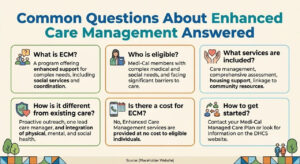
If you have complex needs, including co-occurring substance use, housing instability, or a history of trauma and incarceration, Enhanced Care Management through Solano Impact Care can coordinate your mental health support alongside all the other dimensions of your care. A care manager can help you identify the right provider, navigate the process of getting connected, and make sure that mental health support is integrated with everything else happening in your care plan rather than siloed as a separate thing you have to manage alone.
If you are not sure where to start, calling 211 connects you to a trained specialist who can identify local mental health resources based on your specific situation and eligibility. It is free, confidential, and available around the clock.
If you are in crisis, the 988 Suicide and Crisis Lifeline is available by call or text, 24 hours a day. You do not have to be suicidal to call 988. If you are in a mental health crisis of any kind, that line exists for you.

How Solano Impact Care Approaches Mental Health Support
What makes Solano Impact Care’s approach to mental health support different from a standard referral process is the same thing that makes their approach to everything different: the people doing the work have been through it themselves.
The team has personally navigated depression, anxiety, trauma, grief, and the particular weight of trying to get help from systems that were not designed for people in their situation. They know what it feels like to sit across from a provider who does not quite understand where you are coming from. They know what it feels like to reach out for help and not find it. And they know what it feels like when someone finally shows up who actually gets it.
That lived understanding shapes every interaction. It means a care manager at Solano Impact Care is not going to hand you a pamphlet and a phone number and consider the job done. They are going to stay with you through the process of actually getting connected, because they know how many points along the way a person can fall through if nobody is paying attention.
Their trauma-informed approach means that anxiety and depression are not treated as character flaws or as reasons to question whether someone is serious about recovery. They are understood as predictable responses to the kinds of experiences many Solano County residents have lived through, and they are addressed with compassion and without judgment.
For women in Vallejo and across Solano County who are navigating mental health challenges alongside housing instability or recovery, Hazel’s Tranquility Place provides a structured, supportive residential environment where that healing can happen with real community around it. Founded in 2019 by K. Patrice Williams after she witnessed the gaps in housing and programming for women and children in Solano County during her campaign for Solano County Supervisor, Hazel’s Tranquility Place offers the kind of stable, safe foundation that mental health recovery genuinely requires. Learn more at hazelstranquility.org.
You Deserve Real Support.
One of the most important things this article can do is give you permission to take what you are experiencing seriously. Anxiety is not just stress. Depression is not just sadness. Survival mode is not just life being hard. These are real conditions with real treatments that produce real improvement in how people feel and function.
You do not have to be in crisis to deserve help. You do not have to have hit rock bottom before reaching out. You do not have to be able to articulate exactly what is wrong before making a call. You just have to be willing to take one step.
As we covered in the article on What Is a Resilience-Building Program and Who Is It For?, resilience is not the ability to handle everything alone. It is the ability to reach for support when you need it and build from there. Reaching out for mental health support is one of the most resilient things a person can do.
Solano Impact Care is here for Medi-Cal members in Solano County who are ready to take that step. Call (707) 301-4051 or email care@solanoimpactcare.org to get connected with a care manager who understands where you are coming from and knows how to help you move forward.
You have been surviving. You deserve to do more than survive.