There is a conversation that does not happen often enough in recovery spaces. It is not about cravings or triggers or relapse prevention strategies. It is about grief.
For many people, substance use did not begin in a vacuum. It began after something broke. A death. A relationship that fell apart. A childhood that should have been safe but was not. A version of life that was taken away by circumstance, illness, incarceration, or trauma. Somewhere underneath the addiction, in most cases, there is a loss that never got properly mourned.
And then recovery itself brings its own wave of grief. The person getting sober is not just putting down a substance. They are saying goodbye to the thing that numbed the pain, to the identity they built around their use, to relationships that cannot survive sobriety, and sometimes to years of their life they can never get back. That is an enormous amount of loss to sit with, often all at once, with no chemical buffer left to soften it.
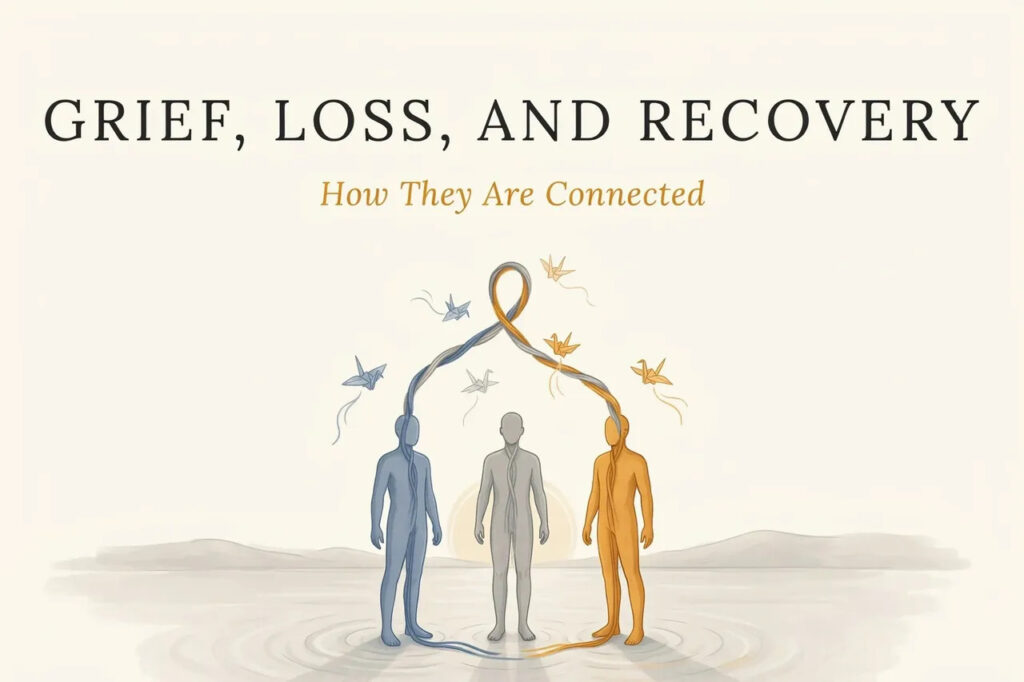
Grief and recovery are not separate topics. They are deeply, consistently intertwined. Understanding that connection is not just academically interesting. It is practically important for anyone who wants to understand why recovery is hard, why it takes time, and what actually needs to happen for it to stick.
What Grief Actually Is
Grief is the natural response to loss. Most people associate it primarily with death, but grief shows up any time something meaningful is taken away or comes to an end. You can grieve a relationship, a home, a version of yourself, a childhood, a career, a dream, or a period of life you cannot recover.
The most well-known framework for understanding grief is Elisabeth Kubler-Ross’s five stages, which include denial, anger, bargaining, depression, and acceptance. That model has been widely taught and widely misunderstood. The stages were never meant to be a linear checklist. They are descriptions of emotional states that can come in any order, repeat, overlap, and coexist. Grief is not a process you complete. It is something you learn to carry differently over time.
What grief tends to look like in real life includes:
- Waves of intense sadness that arrive without warning
- Anger that seems disproportionate to what triggered it
- Difficulty concentrating or making decisions
- Physical symptoms like fatigue, changes in appetite, and disrupted sleep
- A sense of numbness or disconnection from daily life
- Guilt, often accompanied by thoughts about what could have been done differently
- Moments of forgetting the loss, followed by the jarring pain of remembering again
For people in recovery, many of these symptoms can look like, or be confused with, early sobriety symptoms, mental health challenges, or relapse warning signs. That overlap is one of the reasons grief in recovery often goes unaddressed.
How Grief and Substance Use Are Connected
The relationship between grief and substance use runs in both directions. Unprocessed grief is one of the most common pathways into addiction, and addiction creates its own layered grief that has to be worked through in recovery.
Grief as a pathway into substance use
When people experience significant loss and do not have the tools, support, or space to process it, they often find other ways to manage the pain. Substances are effective at numbing emotional pain in the short term. Alcohol quiets the noise. Opioids create a sense of warmth and disconnection from suffering. Stimulants fill the void with energy and distraction.
The problem is that substances do not resolve grief. They pause it. The loss is still there, untouched, waiting underneath the numbness. And over time, as tolerance builds and use escalates, the person is no longer just managing grief. They are managing addiction on top of grief, which makes both harder to address.
Many people in recovery, when they finally get sober and the numbness lifts, encounter grief they have been carrying for years, sometimes decades. A parent who died when they were a teenager. A childhood defined by abuse or neglect. A marriage that collapsed. A child they lost custody of. These losses were never mourned. They were medicated. And now, in sobriety, they are fully present and demanding to be felt.
The losses that come with addiction itself
Addiction does not just preserve grief. It creates it. By the time most people reach recovery, they are carrying a significant amount of loss that resulted directly from their substance use.
Those losses can include:
- Years of life that passed in a fog or were dominated by the addiction
- Relationships with family members, partners, or friends that did not survive the period of active use
- Career opportunities, financial stability, or educational goals that were derailed
- Trust that was broken and may never be fully rebuilt
- Physical health that was damaged in ways that cannot be completely reversed
- A sense of self-respect and dignity that addiction eroded over time
- In some cases, the loss of children to the foster care system or estrangement
Each of these is a real loss. And most people entering recovery are dealing with several of them at once, often without naming them as grief and without being given space to mourn them.
Why Unprocessed Grief Is a Relapse Risk
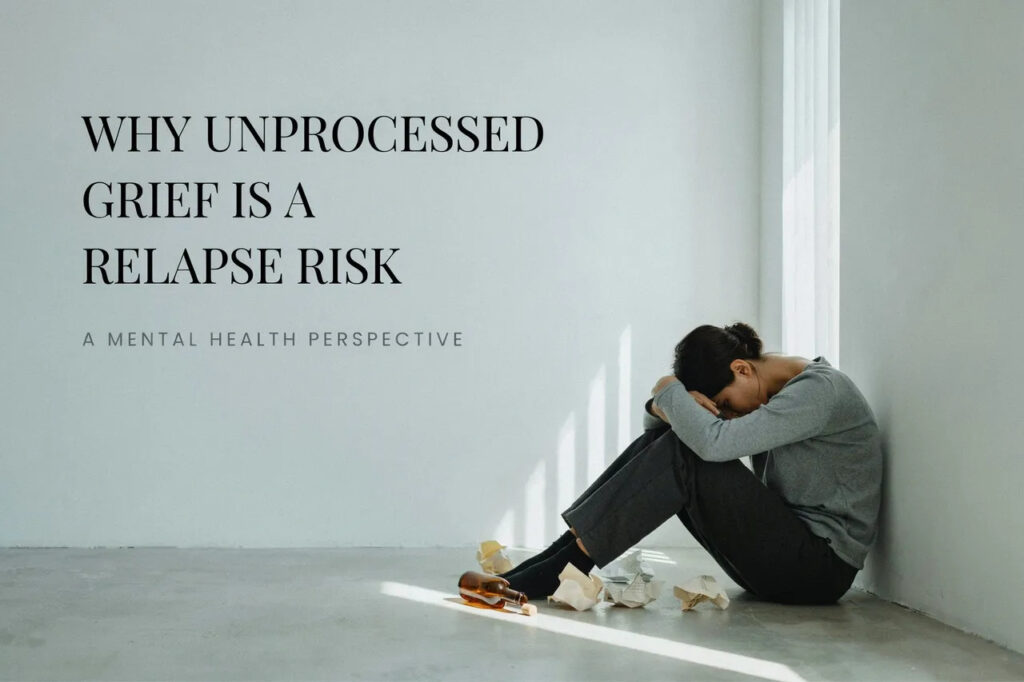
This is one of the most practical reasons to take grief seriously in the context of recovery. Unprocessed grief does not sit quietly in the background. It builds pressure. It surfaces as irritability, emotional flooding, a sense of hopelessness, or a persistent feeling of emptiness that is very easy to interpret as a reason to use again.
One of the most common relapse triggers is what is sometimes called euphoric recall, where the brain romanticizes the substance use experience and forgets the destruction it caused. This tends to intensify when a person is in emotional pain with no adequate coping strategy for managing it. Grief, left unaddressed, creates exactly that kind of pain.
The cycle tends to look like this:
- A grief trigger surfaces, whether it is an anniversary, a photograph, a song, or a chance encounter with someone from the past
- The emotional pain is intense and feels unmanageable
- The brain, trained by years of association, offers the familiar solution
- Without the tools to sit with the grief or the support to process it, the pull toward the substance becomes very strong
This is not weakness. This is the predictable result of unaddressed emotional pain meeting a well-worn neural pathway. Understanding that dynamic is the first step toward interrupting it.
What Processing Grief in Recovery Actually Looks Like
Grieving well does not mean sitting in pain indefinitely. It means giving the loss its proper acknowledgment so that it loses its power to ambush you. Here is what that process tends to involve:
Naming the losses
Many people in recovery have never sat down and made an honest inventory of everything they have lost. Not as an exercise in self-punishment, but as an act of honest acknowledgment. This can be done in therapy, in a journal, or in a safe conversation with a trusted person. Naming losses makes them real in a way that allows them to be processed rather than avoided.
Allowing the feelings without acting on them
One of the core skills of grief work is learning to feel an emotion fully without immediately doing something to make it stop. This is genuinely difficult, especially for people whose primary coping strategy for years was to reach for something external to manage internal discomfort. Sitting with sadness, anger, or guilt without acting on it is a skill that takes practice and usually requires support to develop.
Finding appropriate ritual and meaning
Human beings are meaning-making creatures, and grief tends to move when it is given some form of ritual acknowledgment. This looks different for everyone. It might be writing a letter to someone who died or who is no longer in your life. It might be marking an anniversary in some intentional way. It might be creating something, planting something, or giving something in memory of what was lost. The specific form matters less than the intentionality behind it.
Rebuilding a narrative that includes the loss
Long-term healing from grief does not mean forgetting what happened or pretending it did not matter. It means integrating the loss into your story in a way that does not define you completely. Many people in long-term recovery describe their past losses as part of what shaped them into who they are, without letting those losses become the entire story.
The Grief of Early Sobriety Specifically
There is a particular kind of grief that arrives in early sobriety that does not get talked about enough. It is the grief of giving up the substance itself.
This might sound strange if you have never experienced it. Why would someone grieve something that was destroying them? But for many people, their substance was also their closest relationship, their most reliable comfort, their identity, their social world, and their primary way of coping with being alive. Letting go of it is not just a medical event. It is a genuine loss.
Early sobriety can feel like mourning, because in many ways it is. The numbness is gone. The social world built around using is gone. The familiar rituals are gone. The person is left with full unmediated access to their emotions, often for the first time in years, at exactly the moment when their coping skills are least developed.
This is one of the reasons the first year of recovery is so hard, as we discussed in the article on How Long Does Recovery Actually Take? What the Research Says. The brain is recalibrating, the emotions are raw, and grief is often hitting from multiple directions at once. Having structured support during this period is not optional. It is essential.
Grief, Trauma, and the Body
Grief and trauma are closely related, and for many people in recovery, they are inseparable. Trauma is what happens when an experience overwhelms the nervous system’s capacity to process it. Grief that is not processed can become stored in the body as trauma, showing up as chronic tension, hypervigilance, physical pain, or emotional numbness.
Research in the field of trauma, including the widely cited work of Dr. Bessel van der Kolk, has shown that trauma is held in the body and that healing often requires somatic, meaning body-based, approaches alongside talk therapy. This might include movement, breathwork, yoga, EMDR therapy, or other modalities that engage the nervous system directly.
For people in recovery who are also carrying unprocessed grief and trauma, this means that talk therapy alone may not be sufficient. The healing needs to happen at multiple levels, cognitive, emotional, relational, and physical.

How Peer Support Helps With Grief in Recovery
One of the most powerful elements of recovery communities is the shared experience of loss. In a meeting room, in a sober living home, or in a peer support group, people find themselves surrounded by others who understand what it means to grieve in sobriety.
That shared understanding does something that clinical support alone cannot always provide. It removes the isolation. It says your grief makes sense. It offers living proof that people carry these losses and still build meaningful lives.
As we covered in the article on What Is Sober Living and Is It Right for You?, the community aspect of structured recovery environments is one of their most undervalued benefits. Living alongside people who are doing the same emotional work creates a kind of collective resilience that is genuinely healing.
Peer support workers, many of whom have navigated their own grief and loss as part of recovery, are particularly well-positioned to sit with someone in this kind of pain. They are not there to fix it or rush it. They are there to witness it, which is often exactly what grief needs.
Getting Support in Solano County
If you are in recovery and carrying grief that has not been addressed, or if you are a family member trying to support someone through this, you do not have to navigate it alone.
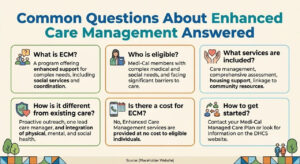
Solano Impact Care provides Enhanced Care Management and Community Supports for Medi-Cal members in Solano County. Their team brings lived experience to every interaction, including the experience of loss, grief, and rebuilding after addiction. They understand this territory not just professionally but personally.
For women and mothers in Solano County who are navigating grief, recovery, and the process of rebuilding family stability, Hazel’s Tranquility Place in Vallejo offers transitional housing, sober living, and aftercare support in a compassionate and structured environment. Founded in 2019 by K. Patrice Williams after she witnessed the gaps in housing and support for women and children in Solano County during her campaign for Solano County Supervisor, Hazel’s Tranquility Place was built specifically for women who need more than just a place to sleep. They need a community, a structure, and a space where healing is possible. Learn more at hazelstranquility.org.
To connect with Solano Impact Care, call (707) 301-4051 or email care@solanoimpactcare.org.
You Are Allowed to Grieve
Recovery asks a lot of a person. It asks for honesty, for courage, for patience, and for a willingness to feel things that substances were keeping at a distance for a long time. Grief is part of that package.
You are allowed to mourn the years you lost. You are allowed to grieve the relationships that did not survive. You are allowed to feel the weight of what your addiction cost you and the people around you. None of that grief makes you weak. It makes you human.
And carrying it honestly, with support, is one of the most important things you can do for your long-term recovery.