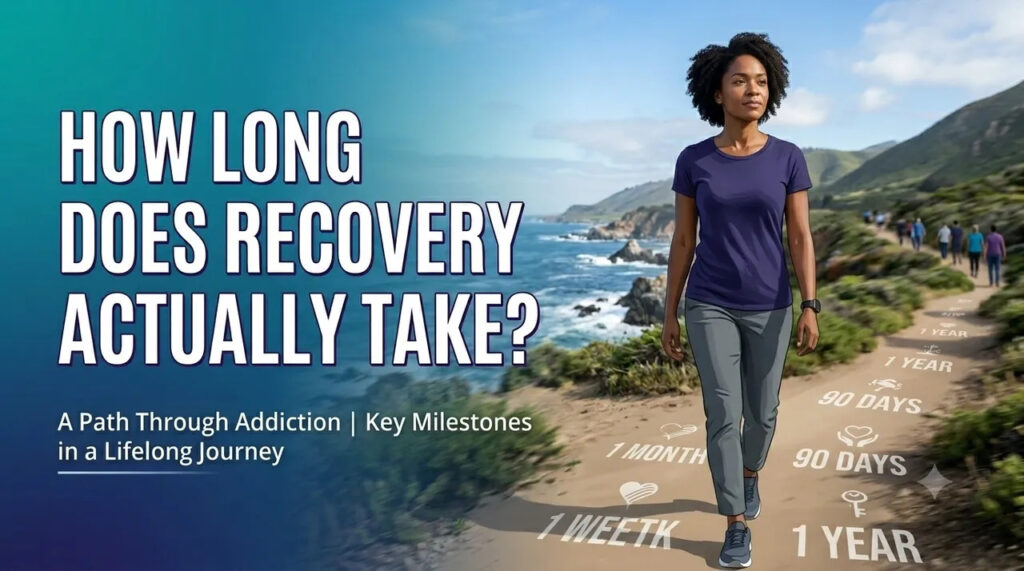
If you have ever typed that question into a search bar at two in the morning, you already know the answer you were hoping to find. You wanted someone to tell you there is a finish line. A date on the calendar. A point where the hardest part is officially behind you and life goes back to something resembling normal.
What research does tell us is that recovery is real, it is common, and it is absolutely possible. It just does not happen on the timeline most people hope for when they first get started.
This article is for anyone who is in recovery and wondering if they are taking too long. It is for families who are watching and waiting and trying to understand what they are looking at. And it is for anyone who has relapsed and is wondering if the whole thing has to start over from scratch. The answer to that last question, by the way, is no.
What Recovery Actually Means
Before talking about how long recovery takes, it helps to be clear about what recovery actually is. This matters more than it might seem, because people measure progress against whatever definition they are working with. If your definition of recovery is simply not using substances, you will measure yourself very differently than if recovery means rebuilding a full, functional, meaningful life.
The Substance Abuse and Mental Health Services Administration, known as SAMHSA, defines recovery as a process of change through which individuals improve their health and wellness, live self-directed lives, and strive to reach their full potential.
That definition is broader than just sobriety. It includes:
- Physical health and wellness
- Mental and emotional stability
- Stable housing and financial footing
- Healthy relationships
- A sense of purpose and connection to community
- The ability to manage life’s challenges without returning to substance use
When you look at recovery through that lens, it becomes clear why it takes time. You are not just waiting for the substance to leave your body. You are rebuilding an entire life, often from the ground up, while also doing the internal work of understanding why the addiction happened in the first place.
What the Research Actually Says About Timeline
Research on recovery timelines has grown significantly over the past two decades, and the findings are both sobering and genuinely encouraging.
One of the most cited pieces of data comes from a large national survey by SAMHSA, which found that approximately 49.5 million Americans aged 12 or older had a substance use disorder in 2023, yet millions of people are in sustained recovery today. The gap between those two numbers represents real people who found their way through.
Here is what the research consistently shows about timelines:
The first year is the highest risk period
The majority of relapses occur within the first 12 months of stopping substance use. This is the window where cravings are most intense, the brain is still recalibrating, and a person has not yet had time to build new coping skills and routines.
Years one through five represent a critical consolidation period
During this window, the risk of relapse decreases significantly for many people, but it does not disappear. This is the period where the real work of rebuilding life happens, including housing stability, employment, relationships, and mental health.
Five years is often cited as a significant milestone
Research has found that people who reach five years of continuous recovery have a significantly lower risk of relapse than those in earlier stages. This does not mean recovery is complete at five years, but it does represent a meaningful shift in the odds.
Brain recovery takes longer than most people expect
Neurological research shows that the brain can take anywhere from 12 months to several years to fully recalibrate after heavy substance use, depending on the substance and duration of use. This is part of why emotional regulation, decision-making, and impulse control can feel difficult well into recovery even when a person is genuinely committed to staying sober.
Why Recovery Takes Different Amounts of Time for Different People
There is no single answer to how long recovery takes because there is no single version of what recovery is recovering from. The factors that shape a person’s timeline include:
The substance involved
Alcohol, opioids, methamphetamine, and other substances each have different effects on the brain and body, and recovery from each has its own neurological timeline. Opioid recovery, for example, can involve prolonged withdrawal symptoms and intense cravings that persist for months. Methamphetamine recovery often involves an extended period of anhedonia, which is difficulty feeling pleasure, that can last a year or more as the brain’s dopamine system slowly heals.
How long the substance was used
Someone who used heavily for ten years is working with a brain that has adapted to the presence of that substance for a long time. The rewiring process simply takes longer.
The presence of co-occurring mental health conditions
Many people in recovery are also dealing with depression, anxiety, PTSD, trauma, or other mental health conditions that existed before the addiction or developed alongside it. When these are not addressed as part of recovery, they become ongoing triggers that make sustained sobriety much harder to maintain.
Housing and environmental stability
This point cannot be overstated. A person trying to recover while also experiencing homelessness, housing instability, or a toxic living environment is fighting a battle on too many fronts at once. Stable housing is not just a comfort. It is one of the most significant predictors of recovery success.
Access to support
People with strong support networks, whether through family, peer communities, professional care management, or structured programs, tend to have better outcomes than those navigating recovery in isolation.
History of trauma
Unresolved trauma is one of the most common underlying factors in substance use disorders. Recovery that does not address trauma tends to stall, because the original wound that the substance was managing is still there.
What Relapse Does and Does Not Mean
This needs to be said clearly because the way people think about relapse has a direct impact on whether they keep going after one happens.
Relapse is not the end of recovery. It is not proof that recovery is impossible for you. It is not evidence that all the progress you made was meaningless.
Relapse is a medical event, not a moral failure. The National Institute on Drug Abuse has consistently described addiction as a chronic brain disorder, and notes that relapse rates for substance use disorders are similar to relapse rates for other chronic conditions like hypertension and diabetes. When someone with diabetes has a blood sugar spike because they stopped managing their condition, we do not tell them their treatment has failed and they should give up. We adjust the approach and keep going.
The same thinking applies to recovery. A relapse is information. It tells you something about what is not working, what support is missing, or what trigger has not yet been addressed. The response to a relapse should be to get back into support, not to conclude that recovery is not possible for you.
As we explored in the article on How to Support a Loved One in Recovery Without Burning Out, relapse is one of the hardest moments for families to navigate. Understanding that it does not reset all progress can make the difference between a family that stays engaged and one that withdraws at the exact moment their loved one needs support most.
The Role of Environment in Recovery Timeline
If there is one variable that the research points to more consistently than almost any other, it is environment. Where a person lives, who they spend time with, and what their daily surroundings look like has an enormous impact on how recovery unfolds.
This is part of why sober living exists as a structured step between treatment and independent life. As we covered in the article on What Is Sober Living and Is It Right for You?, removing yourself from a triggering environment and replacing it with a stable, substance-free community is not just a preference. It is one of the most evidence-based strategies for improving recovery outcomes.
The research on this is consistent. People who return directly from treatment to the same environment where their addiction developed, with the same social circles, the same stressors, and the same access to substances, are significantly more likely to relapse than those who transition through a structured environment first.
What Sustainable Recovery Actually Looks Like
Long-term recovery is not a state of white-knuckling your way through every day. That is an exhausting and unsustainable way to live, and it is not what recovery is supposed to look like when it is working.
People who are thriving in long-term recovery tend to describe it as building a life that does not require escaping. That means:
- A daily routine that includes movement, rest, and meaningful activity
- Relationships that are honest and supportive rather than transactional or harmful
- Work or purpose that provides a sense of contribution and structure
- Ongoing participation in a recovery community, whether through a 12-step program, peer support group, or faith community
- A relationship with a therapist, counselor, or care manager who helps them process challenges before they become crises
- The ability to feel and process difficult emotions rather than suppressing them
None of these things happen overnight. They are built gradually, one choice and one day at a time.
How Solano Impact Care Supports Recovery Over Time
Recovery is not something you get through once and then you are done with support. It is an ongoing process, and having consistent, coordinated support makes a measurable difference in outcomes over time.
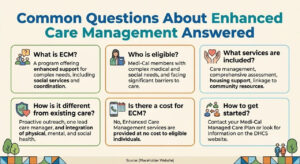
Solano Impact Care provides Enhanced Care Management and Community Supports for Medi-Cal members in Solano County, including people in substance use recovery who need help coordinating across housing, health, mental health, and social services. Their team is made up of people who have been through recovery themselves, which means they understand not just the clinical picture but the lived reality of what the long road actually feels like.
As covered in the article on How CalAIM Is Changing Healthcare for Low-Income Californians, these services are available at no cost to eligible Medi-Cal members and are specifically designed to support people with complex, overlapping needs, exactly the kind of needs that shape recovery timelines.
If you are in recovery in Solano County and want to understand what support is available to you, or if you are a family member trying to help someone get connected, reach out to Solano Impact Care at (707) 301-4051 or email care@solanoimpactcare.org.
The Bottom Line
Recovery takes as long as it takes. That is not a cop-out answer. It is the honest one.
What research tells us is that the first year is hard, the first five years are critical, and the risk of relapse decreases meaningfully with time and support. It tells us that environment matters enormously, that trauma needs to be addressed, and that people with consistent support do significantly better than those going it alone.
What research also tells us, and what the millions of people living in long-term recovery prove every day, is that it is possible. Not easy. Not fast. Not a straight line. But absolutely, genuinely possible.
If you are somewhere on that road right now, keep going.