There is no pain quite like the distance between a parent and a child who has been taken away by circumstances the parent created, even unintentionally, even while in the grip of something larger than themselves. If you are a parent in Solano County trying to find your way back to your children after addiction or incarceration, you are likely carrying guilt, fear, hope, and exhaustion all at once. You may not know where to start. You may not even know what the process is called.
This article is meant to walk you through that process honestly. It is not a substitute for legal advice, and every case is different, but understanding how reunification generally works in California can help you feel less lost and more prepared for what is ahead.
Understanding What System You Are In
The first thing to understand is that not every custody situation works the same way, because the path back depends on which legal system is involved.
There are generally three different paths a custody case can take in California:
Juvenile Dependency Court
This is the system that gets involved when Child Protective Services, often called CPS or Child Welfare Services, removes a child due to concerns about abuse, neglect, substance use, or unsafe living conditions. In California, the juvenile dependency system is designed not just to protect children but to help families repair, rebuild, and reunify when it is safe to do so.
Family Court
This applies when custody is being decided between parents, such as during a divorce or separation, rather than through state intervention. If your co-parent had custody modified while you were incarcerated, this is likely the court you will need to return to.
Probate Court
This applies in situations involving guardianship, often when a relative, such as a grandparent, has taken legal guardianship of a child.
Knowing which system you are in matters because the requirements, timelines, and processes are different for each. If you are unsure, the court documents you received, or the agency that removed your child, should tell you which path applies to your situation.
If Your Children Were Removed by CPS: Understanding Reunification Plans
If your children were removed due to a CPS investigation, your case is moving through juvenile dependency court, and you will likely be given what is called a reunification plan, sometimes referred to as a case plan or family reunification services.
Under California’s Welfare and Institutions Code Section 361.5, reunification services are offered to most parents when a court finds that a child has been abused, neglected, or is at risk of harm, and the court believes reunification is possible with appropriate intervention.
This plan is not just paperwork. It is your legal opportunity to preserve your parental rights and regain custody. It is important to take these requirements seriously and complete them as soon as possible, as this demonstrates your commitment to regaining custody of your child.
A reunification plan typically requires you to address whatever issues led to your child’s removal. Depending on your situation, this might include:
- Completing a substance use treatment program
- Providing clean and consistent drug test results
- Attending individual therapy or counseling
- Completing parenting classes
- Securing safe and stable housing
- Demonstrating consistent and appropriate visitation with your child
- Addressing any domestic violence concerns, if applicable
- Maintaining stable income or employment
Ultimately, the most crucial factor in regaining custody of your child is demonstrating that you can provide a safe and stable environment for them. Everything in the reunification plan exists to help you build toward that proof.
In most cases, the reunification process takes six to eighteen months to resolve in court. That timeline can feel impossibly long when you are separated from your child, but it also reflects a real legal structure built around giving families a genuine chance to heal and reunite, not just rushing toward permanent separation.
It is important to know there is a federal time limit involved as well. The government is generally required to find a permanent placement if a child has been in foster care for fifteen out of the last twenty-two months, which is why staying consistent and engaged with your plan from the very beginning matters so much.
If You Are Returning From Incarceration
If your children’s custody was changed while you were incarcerated, whether through CPS involvement or through family court, release does not automatically restore your custody rights.
If your custody was modified during your incarceration, the court will not automatically restore it upon your release. You must petition the court for a new modification, and you must demonstrate that restoring custody serves the child’s best interest.
This is an important and sometimes painful reality to understand. Coming home does not mean your children come home with you automatically. You will need to actively go back to court and make the case that custody should be restored.
When a formerly incarcerated parent seeks to regain custody, the court generally evaluates several factors, including whether you have stable housing, whether you have employment or income to provide for the child’s basic needs, and whether you have addressed sobriety and rehabilitation if substance use was a factor, including completing treatment programs and providing clean drug tests. Completing parenting programs, especially those offered during incarceration, also demonstrates commitment to the court.
One strategic point worth knowing: requesting a graduated reunification plan, rather than demanding an immediate return to full custody, tends to be more effective. This might start with supervised visitation, progress to unsupervised overnights, and eventually lead to shared or primary custody. Judges tend to respond well to parents who propose measured, child-focused plans rather than demanding immediate full custody.
This approach is not a sign of weakness or a lesser outcome. It is often the path that builds the strongest, most sustainable case for full reunification over time.
Why Addressing Addiction Is Central to Many Cases
Drug or alcohol addiction is one of the most common reasons cited for child removal by CPS social workers, alongside neglect, abuse, mental health issues, and lack of appropriate housing or financial resources. If substance use played a role in your case, your recovery is not just personally important. It is legally central to your path back to your children.
This means courts and case workers are specifically looking for evidence of sustained recovery, not just a single moment of sobriety. That typically includes:
- Completion of a formal treatment program
- Ongoing participation in a recovery support program such as AA, NA, or a peer support group
- Consistent clean drug test results over time
- Engagement with a therapist or counselor addressing the underlying causes of substance use
- A stable living environment that supports continued sobriety
As we discussed in the article on How Long Does Recovery Actually Take? What the Research Says, recovery is not a fast or linear process. Courts generally understand this too, which is part of why reunification timelines are measured in months, not days. What matters most is consistency. A parent who shows steady, documented progress over time builds a far stronger case than one who tries to demonstrate sudden, dramatic change right before a court date.
It is also worth being honest about relapse if it happens during this process. As covered in What to Do When Someone You Love Relapses, a relapse does not have to mean the end of your reunification efforts. What matters to the court is how you respond. Getting back into treatment immediately, being honest with your case worker, and continuing to engage with your plan shows the kind of resilience and accountability that courts and social workers are ultimately looking for.

Stable Housing: One of the Most Critical Pieces
Across nearly every type of custody case, stable and appropriate housing comes up as a central requirement. Courts want to know whether you have a safe, appropriate place for your child to live.
This can be one of the hardest pieces to secure, especially for parents coming directly out of incarceration or out of an unstable living situation tied to addiction. Without an address, without resources, and without a support system, finding housing that meets the standard a court is looking for can feel impossible.
This is exactly the kind of gap that transitional housing programs are built to close. For mothers in Vallejo and across Solano County, Hazel’s Tranquility Place exists specifically to address this need. Founded in 2019 by K. Patrice Williams while she was running for Solano County Supervisor, after she witnessed firsthand the serious gaps in housing and program support for women and children in the county, Hazel’s Tranquility Place provides transitional housing, sober living, and aftercare support designed around family reunification.
For a mother working through a reunification plan, having a documented, stable, structured living environment is not just a personal relief. It is concrete evidence for the court that you are building the safe environment your case plan requires. You can learn more at hazelstranquility.org.
Working With a Lawyer
While this article can help you understand the general landscape, custody cases are legal proceedings, and having proper legal representation matters enormously. An experienced attorney who knows how to handle cases involving child custody and CPS can help you understand the legal system and ensure your rights are protected, and can provide professional representation, valuable advice, and guidance on getting your children back.
If you cannot afford a private attorney, you may qualify for a court-appointed attorney through the dependency court process, since parents in juvenile dependency cases generally have a right to legal representation. Ask your case worker or the court clerk about how to access this if you have not already been assigned an attorney.
Showing Up Consistently Matters More Than Perfection
If there is one theme that runs through nearly every part of the reunification process, it is consistency. Courts, case workers, and judges are not looking for a parent who has never struggled. They are looking for a parent who is showing up, again and again, even when it is hard.
Some practical things that tend to matter throughout the process:
- Attend every visitation you are offered, and arrive on time
- Show up to every court hearing, prepared and on time
- Stay in regular communication with your assigned case worker
- Complete the requirements in your reunification plan as early as possible rather than waiting until close to a court date
- Keep documentation of everything, including treatment completion certificates, drug test results, parenting class certificates, and proof of stable housing
- Be honest with your case worker and the court, even when the truth is difficult
It is important to take these requirements seriously and complete them as soon as possible, as this demonstrates your commitment to regaining custody of your child. Courts are ultimately trying to answer one question: can this parent provide a safe, stable environment for this child now and going forward. Every piece of consistent effort you put in is evidence toward answering that question with a yes.
Getting Support in Solano County
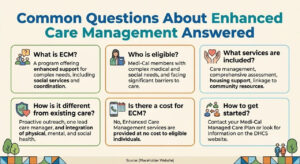
You do not have to navigate this process alone, and you should not have to. Solano Impact Care provides Enhanced Care Management and Community Supports for Medi-Cal members in Solano County, helping coordinate care across housing, recovery, mental health, and social services. For a parent working through a reunification plan, having a care manager who can help connect the pieces, treatment, housing, documentation, and support, can make a meaningful difference in how manageable this process feels.
The team at Solano Impact Care brings lived experience to this work. Many have navigated incarceration, addiction, and the process of rebuilding their own lives and families. They understand both the system you are working through and the weight you are carrying while you do it.
For mothers specifically, Hazel’s Tranquility Place offers transitional housing and structured support built around the goal of family reunification, helping women in Vallejo and across Solano County build the stable foundation that courts and case workers are looking for.
To get connected, call Solano Impact Care at (707) 301-4051 or email care@solanoimpactcare.org. You can also reach Hazel’s Tranquility Place through hazelstranquility.org.
You Are Not Defined by This Chapter
If you are working to regain custody of your children right now, you are doing one of the hardest things a parent can do. You are facing the consequences of a difficult chapter while simultaneously trying to build the life that will let you write a different one.
The process is long, and it asks a great deal of you. But it exists because reunification is possible, and because the law in California is built around the belief that families can heal and rebuild when given the right support and the chance to show, consistently and honestly, who they are becoming.
Keep showing up. Keep documenting your progress. Get the support you need. And do not give up.