Nobody recovers alone. That sentence sounds simple, but the full weight of it only becomes clear when you have tried to do it the other way and found out firsthand how unsustainable that is.
Recovery asks an enormous amount of a person. It asks you to rebuild habits, relationships, identity, and daily life, often simultaneously, often while carrying grief, trauma, and the practical weight of starting over. Doing all of that in isolation is not just hard. For most people, it is not possible to sustain long term.
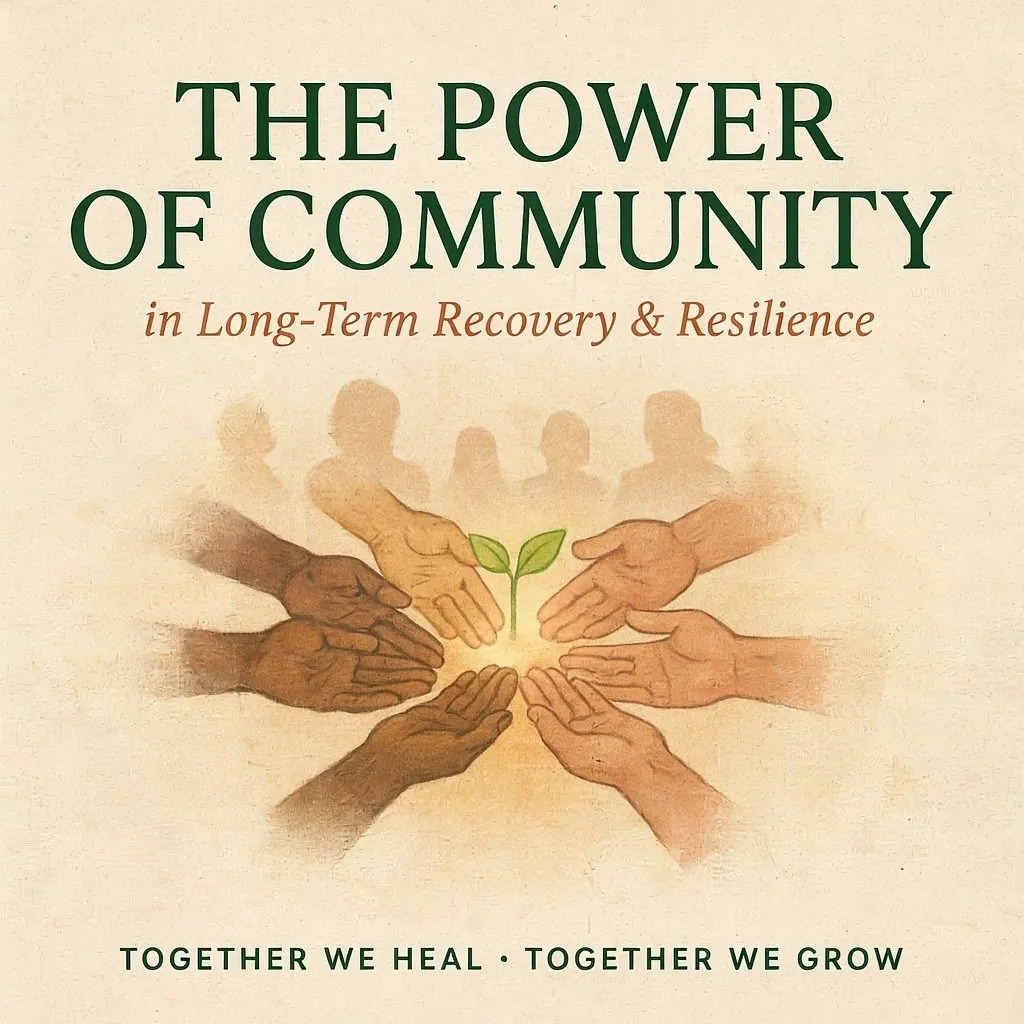
Community is not a bonus feature of recovery. It is one of the most consistent predictors of whether recovery holds. The research on this is clear. The lived experience of people who have walked this road confirms it. And the way Solano Impact Care was built reflects it, because the people doing this work have experienced firsthand what it means to have a community that holds you up when you cannot hold yourself.
This article explores what community actually does in the context of long-term recovery and resilience, why it works, and what it looks like in practice for people in Solano County.
What Community Actually Does for Recovery
When people talk about community in recovery, they sometimes mean it in a vague, feel-good way. It sounds nice but does not explain anything. So it is worth being specific about what community actually does, mechanically, that makes recovery more sustainable.
It regulates the nervous system
Human beings co-regulate with each other. This is not a metaphor. It is a neurobiological reality. When we are in the presence of safe, calm, connected people, our own nervous systems settle. When we are isolated and stressed, our nervous systems stay in a heightened state that makes cravings stronger, emotions harder to manage, and decision-making more reactive. Community, at a basic physiological level, helps the body feel safe enough to heal.
It provides accountability without shame
One of the most powerful things a recovery community does is create a form of accountability that does not rely on punishment or judgment. When you know people who are doing the same work, who will notice if you disappear, who will ask honest questions because they genuinely care, you are held to your commitments in a way that internal willpower alone cannot replicate.
It offers living proof that recovery is possible
This is something that cannot be overstated. When you are in early recovery and cannot yet imagine what sustained sobriety looks like, being surrounded by people who are living it changes what you believe is possible for yourself. Hope is contagious. Seeing someone further down the road than you, someone who has been where you are and kept going, provides a kind of evidence that no amount of reading or therapy can fully replace.
It reduces the isolation that drives relapse
Loneliness and isolation are among the most consistent triggers for relapse across every type of substance use disorder. Community directly addresses that trigger by replacing isolation with belonging. Not forced belonging or performed connection, but the genuine sense of being known and being part of something larger than your own struggle.
It creates practical support networks
Community in recovery is not just emotional. It is practical. It is the person who gives you a ride to a meeting when you do not have transportation. The sponsor who answers the phone at eleven at night. The housemate who notices you have not eaten and makes sure you do. The peer support worker who has been through the system and knows exactly which door to knock on. These practical forms of community support are often the difference between a person staying on track and falling through the gaps.
The Research Behind Community and Recovery
The evidence for community as a driver of long-term recovery is not anecdotal. It is consistent across decades of research.
Studies on recovery outcomes consistently show that social support is one of the strongest predictors of sustained sobriety. People with strong social networks in recovery are significantly less likely to relapse than those who are socially isolated, even when other factors like treatment quality and duration are held constant.
Research on Alcoholics Anonymous and similar twelve-step programs has found that a significant part of what makes them effective is not the specific steps themselves but the community structure they create. The regular meetings, the sponsor relationships, the shared language, and the culture of mutual accountability all build a form of social infrastructure that holds recovery in place.
Studies on recovery housing have similarly found that the community aspect of sober living is one of the primary mechanisms through which it produces positive outcomes. As we covered in the article on What Is Sober Living and Is It Right for You?, living alongside people who are doing the same work reduces isolation, builds peer accountability, and provides daily exposure to living proof that recovery is sustainable.
Research on resilience more broadly, across populations dealing with everything from trauma to chronic illness to poverty, consistently finds that social connection is one of the most reliable protective factors against negative outcomes. People with community are more resilient. That is not an opinion. It is one of the most replicated findings in the social sciences.
Why Community Is Especially Critical in the Early Stages
The first year of recovery is the most vulnerable period. As we explored in the article on How Long Does Recovery Actually Take? What the Research Says, the majority of relapses occur within the first twelve months, when the brain is still rewiring, emotional regulation is still developing, and the practical infrastructure of a new life is still being built.
This is exactly when community matters most and when people are most likely to be without it.
Many people enter early recovery having lost or damaged most of their relationships during active addiction. The social world they had was often built around using. Friends, routines, and gathering places were all connected to the substance. Getting sober means leaving that world behind, which is the right decision, but it also means entering early recovery with a significant social deficit at exactly the moment when social support is most needed.
This is one of the most important reasons why structured recovery environments, whether sober living homes, recovery community organizations, or peer support programs, are so valuable in early recovery. They provide an immediate community to step into at the moment when a person most needs one and is least likely to have one naturally.
Building community in early recovery does not happen automatically. It requires intentional effort, showing up to meetings even when you do not feel like it, being honest in group settings even when it is uncomfortable, accepting help when it is offered even when every instinct says to handle things alone. That effort feels costly at first. Over time it becomes one of the most valuable investments a person in recovery can make.

What Community Looks Like in Long-Term Recovery
As recovery progresses, the nature of community tends to shift. In early recovery, the community is often primarily the recovery community itself, meetings, sponsors, sober living, peer support. Over time, as life stabilizes, community expands to include employment relationships, family connections, faith communities, neighborhood networks, and broader social circles.
This expansion is itself a sign of health. Long-term recovery is not about staying forever in a protective bubble. It is about building a full life with real roots in multiple communities, so that no single loss or change can leave you without support.
In long-term recovery, community serves a different but equally important function. It is less about crisis support and more about belonging. The sense of being known, of mattering to people, of having a place in the world, is one of the things that makes a life feel worth protecting. People with that sense of belonging have something to lose by relapsing, something real and present, not just an abstract future they are trying to reach.
Community in long-term recovery also tends to involve giving back. Many people in sustained recovery describe the shift from being supported by community to contributing to it as one of the most meaningful transitions in their recovery journey. Becoming a sponsor, volunteering with a recovery organization, sharing your story with someone newer to the road, mentoring someone coming out of incarceration. These forms of contribution create purpose, reinforce recovery identity, and strengthen the community that once held you up.
How the Solano Impact Care Team Lives This Out
At Solano Impact Care, community is not a program component. It is the foundation of how the organization exists and how its team members show up every day.
The people doing this work have personally navigated homelessness, incarceration, substance use, mental health crises, grief, and loss. They found their way through, in part, because of community. People who showed up for them. Spaces where they were known. Organizations that treated them as whole people rather than problems to be managed. They know what that kind of community made possible in their own lives, and they bring that knowledge into every interaction with the people they serve.
This is what sets Solano Impact Care apart from organizations staffed entirely by people who have not walked this road. When a care manager has rebuilt their own life after incarceration, they do not just understand the bureaucratic steps of reentry. They understand the loneliness of coming out with nothing. They understand what it felt like when someone showed up and genuinely helped. And they bring that understanding into the relationship with every client, creating the kind of trust and connection that is itself a form of community.
The team’s approach is built around developing sustainable community networks for the people they serve, not just connecting people to services and moving on, but helping build the web of relationships and resources that will hold someone in recovery for the long term. That includes connecting people to peer support communities, recovery groups, employment networks, housing programs, and local organizations that become part of a person’s ongoing support structure.
The authenticity that makes this possible comes directly from shared experience. When the person across from you has been where you are, the conversation starts in a different place. The walls come down faster. The willingness to be honest comes more easily. And that honesty is what allows real community to form, not the performed version of community where everyone says the right things, but the kind where people actually know each other and hold each other up.
To get connected, call (707) 301-4051 or email care@solanoimpactcare.org.
You Were Not Meant to Do This Alone
Recovery is hard enough when you have people around you. Without community, it becomes nearly impossible to sustain over the long term. The isolation that addiction creates is itself one of the things that keeps people stuck, and building community is one of the most powerful tools for breaking that cycle.
You do not have to build it all at once. You start with one meeting, one honest conversation, one connection with someone who understands what you are carrying. You show up again the next week. You let people see you, and you let yourself see them.
That is where community starts. And over time, if you keep showing up, it becomes the thing that holds your recovery in place when nothing else can.
References:
https://www.sciencedirect.com/topics/medicine-and-dentistry/alcoholics-anonymous