If you have ever felt like your mental health and your substance use are feeding each other in a loop you cannot seem to break, there is a reason for that. And more importantly, there is a name for it, a treatment approach for it, and a real path through it.
The term is dual diagnosis. It describes what is happening when a person is dealing with both a mental health condition and a substance use disorder at the same time. It is not a character flaw. It is not two separate problems that happened to collide by coincidence. For many people, it is one deeply connected experience that has been misunderstood, underdiagnosed, and undertreated for most of their lives.
This article is for anyone who suspects they might be dealing with more than just addiction or more than just a mental health condition. It is for family members who cannot understand why their loved one is not getting better despite treatment. And it is for anyone in Solano County who wants to understand what integrated support actually looks like and where to find it.
What Dual Diagnosis Actually Means
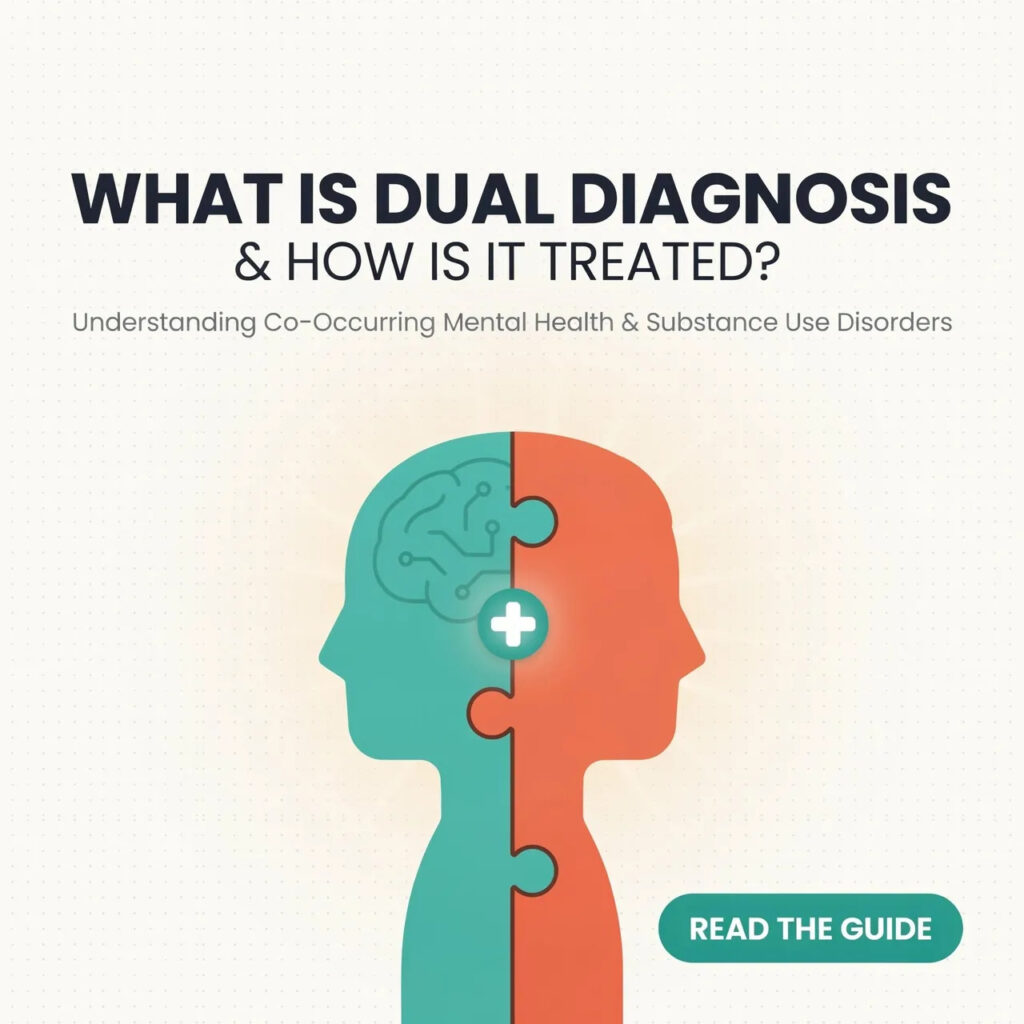
Dual diagnosis is the medical term for having a mental health disorder and a substance use disorder simultaneously. The symptoms of one condition make the other condition worse, and vice versa.
You might hear it called co-occurring disorders, which means exactly the same thing. The language is slightly different but the reality is identical: two conditions, happening at the same time, tangled together in ways that make both harder to treat if you only focus on one.
For example, an individual may have depression and an addiction to alcohol, or anxiety coupled with opioid misuse. These combinations are not random. They follow patterns that research has consistently documented, and understanding those patterns is one of the first steps toward getting the right kind of help.
The scale of this is significant. Approximately 21.2 million adults in the United States had both a mental illness and a substance use disorder in 2024. That is not a small or unusual group of people. That is a massive portion of the population dealing with something that is still widely misunderstood, even within the healthcare system.
Which Mental Health Conditions Commonly Occur Alongside Substance Use
Not every combination is equally common, and understanding which mental health conditions most frequently show up alongside substance use disorders can help a person recognize what they might be experiencing.
Mental health disorders that commonly co-occur with substance use disorders include depression, anxiety, bipolar disorder, and post-traumatic stress disorder, also known as PTSD.
Beyond those four, dual diagnosis can also involve:
- Attention deficit hyperactivity disorder, or ADHD
- Schizophrenia and other psychotic disorders
- Borderline personality disorder
- Obsessive compulsive disorder
- Eating disorders
Anxiety disorders are particularly common among people who seek treatment for substance abuse and addiction. People with social anxiety, for example, may use alcohol or drugs like marijuana to feel more at ease in social settings.
Each of these combinations creates its own dynamic. Depression and alcohol use reinforce each other because alcohol is a depressant that feels like temporary relief and produces deeper lows. PTSD and opioid use are linked because opioids are deeply effective at numbing emotional pain that trauma leaves behind. Bipolar disorder and stimulants can connect through the way stimulants mimic the energy of manic states and become a way to self-regulate mood.
None of this is an excuse. But all of it is an explanation. And explanations matter enormously when it comes to finding the right treatment.
Which Comes First: The Mental Health Condition or the Substance Use?
This is one of the most common questions people ask, and the honest answer is that it varies. These disorders can occur simultaneously or one can develop after the other.
In some cases, the mental health condition comes first. A person who has been living with undiagnosed depression or untreated trauma finds that substances offer relief from symptoms they do not have any other way to manage. The substance use develops as a form of self-medication, which works in the short term and creates dependence over time.
In other cases, the substance use comes first. Long-term heavy use of alcohol, methamphetamine, opioids, or other substances can trigger or significantly worsen mental health conditions. The brain chemistry changes that result from prolonged substance use can create or deepen depression, anxiety, and paranoia in ways that persist even after the substance use stops.
In still other cases, both seem to emerge at the same time, driven by a shared root cause such as trauma, genetics, or a highly stressful environment.
Research has shown that genetics can play a role in the development of both mental health disorders and addiction. Individuals with a family history of mental illness or addiction may be more susceptible to developing co-occurring disorders. Experiencing trauma or high levels of stress can increase the risk of developing both a mental health disorder and a substance use disorder. Traumatic events can trigger the onset of mental health disorders, and individuals may turn to drugs or alcohol as a coping mechanism.
The reason the sequence matters is that understanding how the two conditions developed helps clinicians design treatment that addresses the actual roots of what is happening, not just the surface symptoms.
Why Dual Diagnosis Is So Often Missed
Despite how common dual diagnosis is, only 7.4% of individuals with co-occurring disorders receive treatment for both conditions. That number is staggering. It means the vast majority of people with dual diagnosis are either getting no treatment at all, or getting treatment that only addresses half of what is going on.
There are several reasons this happens.
The systems are often separate
Mental health services and substance use treatment have historically operated as parallel systems that rarely communicate with each other. A mental health provider might refuse to treat someone who is actively using. A substance use program might not have the clinical tools to address serious mental illness. The person falls into the gap between the two.
Symptoms overlap and obscure each other
Depression looks like withdrawal. Anxiety can look like stimulant use. Psychotic symptoms can look like the effects of certain drugs. When clinicians are not specifically trained to look for both, they often miss one or diagnose the wrong thing entirely.
People do not always disclose everything
Someone seeking mental health support may not mention their substance use because they fear judgment or do not see it as relevant. Someone seeking addiction treatment may not mention their mental health history for similar reasons.
Stigma compounds the problem
Both mental health conditions and substance use disorders carry stigma individually. Together, the stigma can feel crushing, leading people to minimize, hide, or deny the full picture of what they are dealing with.
Dual diagnosis is associated with poor treatment outcomes, which can be further fueled by frequent exclusion from specialist treatment due to the separation between mental health and drug and alcohol services. This is not the fault of the person seeking help. It is a structural gap in how care has traditionally been organized.
What Dual Diagnosis Treatment Actually Looks Like
Here is the critical point that changes outcomes: treating both conditions simultaneously is often imperative to reaching a positive outcome and preventing relapse.
Treating one without the other tends not to work. If you address the substance use but leave the underlying mental health condition untreated, the emotional pain that drove the use in the first place is still there. Recovery becomes an act of white-knuckling through pain with no tools to manage it. Relapse becomes almost inevitable. If you address the mental health condition but leave the substance use untreated, the substances continue to interfere with the stability that treatment is trying to create.
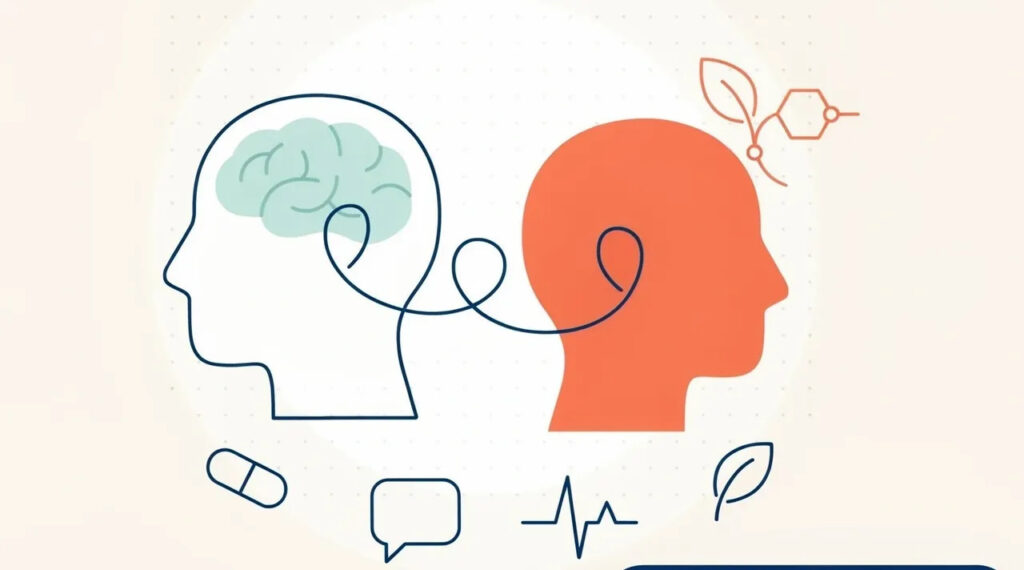
Dual diagnosis treatment involves integrated care, involving a multidisciplinary team that treats many aspects of the individual’s life and wellbeing.
What integrated treatment looks like in practice:
Assessment that looks at the whole picture
A good dual diagnosis assessment screens for both substance use and mental health conditions together, using clinical tools designed to identify how the two interact in that specific person’s situation.
Therapy that addresses both conditions
Cognitive Behavioral Therapy, also known as CBT, is one of the most widely used approaches. It helps people identify the thought patterns and emotional responses that drive both mental health symptoms and substance use, and develop new ways of responding. CBT has an extensive evidence base in treating mental health and substance use disorders. Other therapeutic approaches used in dual diagnosis treatment include Dialectical Behavior Therapy, Motivational Interviewing, and trauma-focused therapies such as EMDR.
Medication when appropriate
In some cases, medication may be prescribed to manage symptoms of mental health disorders. It is essential that these medications are carefully monitored by a healthcare professional, especially in the context of substance use history. Medication can be a critical piece of stabilizing mental health symptoms enough that a person can meaningfully engage in therapy and recovery work.
Peer support and community
Support groups such as Alcoholics Anonymous or Narcotics Anonymous can provide a sense of community and shared experience, which is invaluable during recovery. There are also groups specifically for individuals with dual diagnosis, such as Dual Recovery Anonymous. Being around others who understand the specific experience of managing both a mental health condition and addiction reduces isolation and provides real-world models of what recovery looks like.
Harm reduction as part of the approach
For the dual diagnosis population, harm reduction strategies offer a holistic approach that prioritizes safety and wellbeing, recognizing that complete sobriety may not always be immediately achievable or realistic. This might include naloxone distribution, outreach programs, or meeting people where they are in their readiness to engage with treatment rather than requiring total abstinence as a condition of receiving any care at all.
Why Treating Trauma Is Central to Dual Diagnosis Recovery
For a large portion of people with dual diagnosis, trauma is the thread that connects the mental health condition and the substance use. As we explored in the article on Grief, Loss, and Recovery: How They Are Connected, unresolved trauma does not sit quietly. It drives behavior. It shapes coping strategies. It creates the emotional conditions that make substances feel necessary.
PTSD in particular has one of the highest rates of co-occurrence with substance use disorders of any mental health condition. The hypervigilance, nightmares, emotional numbness, and intrusive memories that characterize PTSD are extraordinarily difficult to live with, and substances offer a way to manage those symptoms in the short term while making them worse over time.
Any dual diagnosis treatment that does not directly address underlying trauma is missing a critical piece of the picture. This is why trauma-informed care, which is one of the foundational values at Solano Impact Care, is not just a nice approach. It is a clinical necessity for this population.
Recognizing the Signs That Something More May Be Going On
Not everyone with dual diagnosis has been formally diagnosed with a mental health condition. Many people have been living with symptoms they have never had a name for, managing them the best way they knew how, which often meant substances.
Some signs that a mental health condition may be present alongside substance use include:
- Persistent depression or hopelessness that does not lift even during periods of sobriety
- Anxiety that feels constant and overwhelming, not just situational
- Extreme mood swings that go beyond what circumstances seem to explain
- Hearing or seeing things that others do not
- Paranoia or difficulty trusting people even in safe relationships
- Racing thoughts, decreased need for sleep, and periods of unusually elevated energy followed by crashes
- Difficulty concentrating, staying organized, or completing tasks, even when motivated to do so
- Intrusive memories, nightmares, or emotional numbness connected to past traumatic events
If several of these feel familiar, it does not mean something is permanently wrong with you. It means you may have been dealing with more than one thing at a time and only getting help for part of it.
The Role of Local Roots in Resilience Work
One of the things that makes Solano Impact Care distinctly effective for residents of Solano County is that the organization is genuinely local. The team was born and raised in this county. They know Vallejo, Fairfield, Vacaville, Dixon, Suisun City, and Rio Vista not as service delivery zones but as home.
That matters for resilience work specifically because so much of resilience is built through community belonging, knowing the resources in your area, understanding the specific challenges your neighborhood faces, and feeling like you are part of something larger than your own struggle.
A team with deep local roots can connect people to resources that do not show up in a Google search. They can navigate the specific gaps in Solano County’s service landscape because they have experienced those gaps themselves. They can speak with authority about what is actually available and what actually works, not just what theoretically exists on a services map.
For women and mothers in Vallejo specifically, that local knowledge connects directly to resources like Hazel’s Tranquility Place, the transitional housing and sober living program founded in 2019 by K. Patrice Williams after she witnessed firsthand the gaps in housing and support for women and children in Solano County during her campaign for Solano County Supervisor. Hazel’s Tranquility Place offers exactly the kind of stable, structured, and compassionate environment where resilience work can genuinely take root. Learn more at hazelstranquility.org.
What Happens When Dual Diagnosis Goes Untreated
The consequences of leaving dual diagnosis unaddressed are serious and well-documented. People with untreated co-occurring disorders are more likely to experience repeated relapse, more severe mental health crises, housing instability, involvement with the criminal justice system, and poorer physical health outcomes overall.
Treating dual diagnosis effectively requires addressing both the mental health disorder and the substance use disorder simultaneously. Failure to do so can result in an incomplete recovery, as untreated mental health issues can trigger relapse.
This is directly relevant to what we covered in the article on What to Do When Someone You Love Relapses. When relapse keeps happening despite genuine effort and engagement with treatment, dual diagnosis is one of the most important things to rule out. Repeated relapse is sometimes not about willpower or commitment. It is about an underlying mental health condition that has never been properly identified or treated.
Getting a thorough dual diagnosis assessment can be a turning point for people who have felt stuck in a cycle of recovery and relapse without understanding why the cycle keeps repeating.
Getting Support in Solano County
If you are in Solano County and suspect you or someone you love may be dealing with dual diagnosis, the starting point is getting a proper assessment that looks at the full picture of what is happening, not just one piece of it.
Solano Impact Care provides Enhanced Care Management and Community Supports for Medi-Cal members in Solano County. Their team works with individuals who have complex, overlapping needs, including people managing both mental health conditions and substance use disorders. Their care managers can help coordinate across providers, connect you to the right level of clinical support, and walk alongside you through a process that can feel overwhelming to navigate alone.
What makes this team different is the same thing that makes them effective with this population specifically. As covered in our earlier post on Why Solano Impact Care Is Different: Experience-Driven Community Care, the people doing this work have lived experience with many of the same conditions they are helping others navigate. That shared background creates a level of trust and authentic understanding that is hard to replicate in a traditional clinical setting, and trust is often what finally allows someone to be fully honest about everything they are dealing with.
For women in Vallejo and across Solano County who are navigating dual diagnosis alongside housing instability or family crisis, Hazel’s Tranquility Place provides transitional housing, sober living, and aftercare support in a structured and compassionate environment. Founded in 2019 by K. Patrice Williams after she witnessed the serious gaps in support for women and children in Solano County during her campaign for Solano County Supervisor, Hazel’s Tranquility Place offers women a stable foundation from which to engage with the treatment they need. Learn more at hazelstranquility.org.
To connect with Solano Impact Care, call (707) 301-4051 or email care@solanoimpactcare.org.
You Are Not Too Complicated to Get Better
One of the most damaging things a person with dual diagnosis can come to believe is that they are simply too complicated, that their situation is too layered, that the mental health piece makes them untreatable in addiction settings and the addiction piece makes them untreatable in mental health settings.
That belief is understandable, because for a long time the systems confirmed it. People were turned away from programs that could not handle the complexity of what they were carrying.
But integrated dual diagnosis treatment exists precisely to meet that complexity. The right support does not ask you to fix one thing before getting help for the other. It meets you where you are, with everything you are carrying, and works with the whole picture.