Ask most people what they need to rebuild their life and the list is not complicated. A place to live. A way to earn income. Healthcare that actually addresses what they are dealing with. These three things sit at the foundation of a stable life. And yet the systems designed to address each of them almost never talk to each other.
Housing programs focus on housing. Employment programs focus on employment. Healthcare focuses on healthcare. Each does its job inside its own lane. And the person trying to rebuild their life has to somehow coordinate between all of them on their own while also managing everything that brought them to this point in the first place.
That is not a reasonable expectation. And the outcomes reflect it. Relapse rates, return to homelessness, and failed reentry are all significantly higher for people navigating these systems independently than for those who have coordinated support that addresses housing, employment, and health together.
This article explains why these three things must work together and why Solano Impact Care has built a network of partner organizations specifically to make that coordination real for people in Solano County.

Photo by Ali Gündoğdu on Unsplash
The Three Pillars of Stable Rebuilding
Housing, employment, and health are not three separate goals that happen to be relevant to the same person. They are deeply interconnected. Each one affects the others in ways that make it nearly impossible to sustain any one of them without the others.
Housing affects everything else
Without stable housing, managing a health condition is nearly impossible. Medication needs to be stored somewhere. Sleep needs to happen somewhere safe. Appointments need to be kept, which requires a level of stability that homelessness makes extremely difficult. Employment requires an address on an application and the ability to show up rested, clean, and prepared. Recovery requires an environment that does not constantly trigger the cravings and stressors that drive relapse. Housing is not the reward for getting your life together. It is the platform without which getting your life together becomes nearly impossible.
Employment affects everything else
Income reduces the financial desperation that puts housing and recovery at risk. Work provides structure, purpose, and social connection, all of which are protective factors for mental health and sobriety. Employment gives people something to build toward and something to lose, which matters enormously for motivation in recovery. Without income, housing becomes unsustainable no matter how it was obtained. And without the sense of purpose that comes from contributing, the emptiness that often underlies substance use remains unfilled.
Health affects everything else
Untreated mental health conditions make employment difficult to sustain and recovery hard to maintain. Chronic physical health conditions that go unmanaged create crises that disrupt housing and work. Substance use disorders that are not addressed as health conditions produce the behaviors and consequences that destabilize everything else. When health needs are not met, every other area of rebuilding is harder, slower, and more fragile.
These three pillars do not just support each other. They depend on each other. And that mutual dependence is why they must be addressed together.
What Happens When They Are Addressed Separately
The standard approach to social services in most systems is sequential. Get sober, then get housing.
Likewise, get housed, then get employed. Get stable, then address mental health. This sequential model sounds logical. In practice it often fails.
It fails because the conditions that make each step possible are often dependent on the other steps being in place first. A person cannot fully engage with substance use treatment while experiencing the chronic stress of homelessness. in additionally, a person cannot maintain employment while in a mental health crisis that is going unaddressed. A person cannot sustain housing without income and without the mental health stability to manage the responsibilities that tenancy requires.
Sequential support also fails because life does not pause while one system does its work. A person waiting for housing before addressing employment is losing time they could be using to build skills and connections. A person waiting for sobriety before accessing healthcare may be getting sicker in ways that make recovery harder. The gaps between sequential interventions are where people fall through.

Why Solano Impact Care Built a Network
Solano Impact Care understood from the beginning that no single organization could address all three pillars effectively. Housing, employment, and health each require specific expertise, specific relationships, and specific resources that are not easy for any one organization to replicate across all three domains.
So instead of trying to do everything, Solano Impact Care built something more effective. A coordinated network of organizations that each bring deep expertise in their specific domain, connected by care management that ensures those domains work together rather than in isolation.
The care managers at Solano Impact Care hold the coordination layer. They assess the full picture and develop care plans that address all three pillars. Also, they make referrals that are followed through. They stay engaged across the entire network of support rather than handing clients off and moving on. And they do all of this from a foundation of lived experience, having personally navigated homelessness, incarceration, substance use, mental health challenges, and the process of rebuilding a life.
That lived experience is not incidental. It is what allows them to coordinate more effectively than someone who has only learned these systems from the outside. They know which doors open, which processes are slow, and where people are most likely to fall through. They anticipate those gaps and address them before they become crises.
The Partner Organizations That Make It Work
Match2Hire
Match2Hire addresses the employment pillar directly. As a registered nonprofit dedicated to bridging the gap between job seekers and employers, Match2Hire works specifically with people who face real barriers to employment. Criminal records, employment gaps, limited professional references, and lack of interview experience are all factors that Match2Hire addresses rather than ignoring.
Employment is not a separate topic from health and housing. It is one of the most powerful interventions available for sustaining both. Income maintains housing. The structure and purpose of work protects mental health. The identity that comes from being employed reinforces recovery. When Solano Impact Care connects a client to Match2Hire, it is not a job placement service add-on. It is a core component of a health and housing stability plan.
Solano Home Assist
Solano Home Assist addresses the housing pillar with specialized expertise. Their mission is to facilitate access to housing resources, identify and overcome barriers, and empower residents through workshops and one-on-one counseling. For clients whose care plan includes housing as a priority, which is most of them, Solano Home Assist brings the housing-specific knowledge that care management coordinates around.
The combination of Solano Impact Care’s health and care coordination with Solano Home Assist’s housing expertise means that housing is addressed not just as a referral but as a sustained, skilled intervention that builds the client’s own capacity to maintain housing over time.
Solano EmpowerTech
Solano EmpowerTech bridges the gap between the employment pillar and the reality of today’s job market. For justice-involved individuals who have been away from the workforce and need to build digital skills before employment is realistic, Solano EmpowerTech provides digital literacy workshops, intensive boot camps, and an online learning portal. This is the preparation layer that makes Match2Hire’s employment connections sustainable.
BrandGOV
BrandGOV addresses the civic and economic dimensions of community wellbeing that sit beyond the immediate crisis. Through outreach, education, and economic development capacity building, BrandGOV works with underserved communities to build the longer-term capacity for economic participation that sustains stability after the immediate rebuilding phase.
Hazel’s Tranquility Place
Hazel’s Tranquility Place in Vallejo addresses all three pillars simultaneously for women who need residential support. As a transitional and sober living home providing a safe haven for women reentering from incarceration or recovering from substance use, Hazel’s Tranquility Place creates the stable environment from which health, employment, and housing stability can all be built at the same time. It is a structured, supportive housing program created to help people stabilize during vulnerable transitions. Founded in 2019 by K. Patrice Williams after she witnessed firsthand the gaps in housing and support for women and children in Solano County during her campaign for Solano County Supervisor, Hazel’s Tranquility Place is one of the most important resources in this network for women navigating rebuilding.
Learn more at hazelstranquility.org.
What This Looks Like for Someone in Solano County
A person leaving incarceration in Solano County who connects with Solano Impact Care does not get a list of phone numbers. They get a care manager who assesses their full situation. Who coordinates transitional housing through Hazel’s Tranquility Place if they are a woman, or through other housing resources in the county if not. Who connects them to primary care and mental health support. Also, who links them to Solano EmpowerTech to build digital skills. Who coordinates with Match2Hire when they are ready to pursue employment. And who stays involved across all of it rather than disappearing when one referral is made.
As we covered in the article on Employment Resources for Justice-Involved Individuals in Solano County, employment after incarceration is genuinely hard. But it is significantly more achievable when it is coordinated with housing stability and health support rather than pursued in isolation from both.
That coordination is what changes outcomes. Not dramatically and not overnight. But consistently and measurably, for the people in Solano County who access it.
Getting Connected
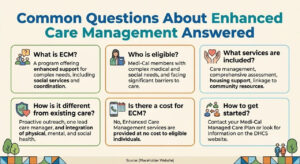
If you are a Medi-Cal member in Solano County who is navigating the intersection of housing, employment, and health needs, Solano Impact Care coordinates across all three through Enhanced Care Management and Community Supports, connected to a network of partner organizations built specifically to address each pillar with real expertise.
The starting point is one conversation.
Call (707) 301-4051, email care@solanoimpactcare.org, or visit solanoimpactcare.org/get-started to get started.