
When people think about healthcare, they think about doctors, hospitals, medications, and insurance. They think about what happens after something goes wrong with their body or their mind. Healthcare, in the way most people understand it, is a response to a problem that has already developed.
What the evidence has been showing for decades, and what California’s healthcare system is finally acting on, is that this understanding is incomplete. The conditions that determine whether someone gets sick, how sick they get, how well they recover, and whether they stay healthy are not primarily medical. They are social. They are economic. And among all of them, housing stands out as one of the most powerful.
Where you sleep tonight has more to do with your health tomorrow than almost any single clinical intervention. That is not an opinion. It is one of the most consistent findings in public health research across populations, conditions, and geographies. And understanding it changes everything about how we should think about healthcare, who delivers it, and what it actually needs to include.
This article explains why housing is healthcare, what the evidence says, and what it means for people in Solano County who are trying to get healthy, stay healthy, or support someone they love in doing the same.
What Social Determinants of Health Actually Are
To understand why housing is healthcare, you first need to understand the concept of social determinants of health. This is the term researchers and public health experts use to describe the conditions in which people are born, grow, live, work, and age, and how those conditions shape health outcomes.
Social determinants of health include:
- Housing stability and quality
- Income and economic security
- Food access and nutrition
- Education and literacy
- Employment and working conditions
- Transportation access
- Social connection and community support
- Exposure to environmental hazards
- Experiences of racism, discrimination, and trauma
- Access to healthcare itself
Research consistently shows that these social and economic factors account for somewhere between 30 and 55 percent of health outcomes, depending on the population and condition being studied. Clinical care, the doctor visits and hospital stays and medications that most people think of as healthcare, accounts for roughly 10 to 20 percent.
That gap is not an argument against clinical care. It is an argument for taking social determinants seriously as healthcare in their own right. And housing is one of the most significant of all of them.
What Homelessness Does to the Body and Mind
The health consequences of homelessness and housing instability are severe, well-documented, and deeply connected to the chronic conditions that drive the most significant healthcare costs in California and across the country.
Physical health
People experiencing homelessness have dramatically higher rates of chronic conditions including diabetes, hypertension, cardiovascular disease, liver disease, and respiratory illness than the general population. They are more likely to suffer from infectious diseases including tuberculosis, hepatitis, and skin infections. They experience higher rates of traumatic injury. And they are significantly less able to manage any of these conditions effectively because the basic requirements of medication storage, consistent rest, adequate nutrition, and hygiene are all undermined by the absence of stable housing.
Mental health
Homelessness is itself a traumatic experience. The chronic stress of not knowing where you are sleeping, the exposure to violence and instability, the loss of privacy and dignity, and the accumulated weight of all of it produce and worsen mental health conditions at every level. Depression, anxiety, PTSD, and psychotic disorders are all significantly more prevalent among people experiencing homelessness than in the general population. And mental health conditions that might be manageable with stable housing and appropriate support become crises in the context of homelessness.
Substance use
The relationship between housing instability and substance use runs in both directions. Substance use disorders contribute to housing instability, and housing instability intensifies and sustains substance use. As we covered in the article on What Is Sober Living and Is It Right for You?, the environment a person returns to after treatment is one of the most powerful predictors of whether their recovery holds. Returning to homelessness after treatment is one of the most significant risk factors for relapse that exists.
Life expectancy
The cumulative effect of these health consequences is stark. Research has consistently found that people experiencing chronic homelessness die significantly earlier than the general population. In many studies, the average life expectancy of someone experiencing chronic homelessness is decades shorter than that of a housed person of similar age and background. That gap is not explained by genetics or individual choices. It is explained by the conditions of homelessness itself.
What Happens to Health When Housing Is Unstable
Homelessness is the most severe form of housing instability, but it is not the only one. Millions of people live in conditions that fall short of stable housing without being technically homeless. They are doubled up with family members in overcrowded conditions. Also, they are in housing that is unsafe, infested, or structurally compromised. They are spending more than half their income on rent and one unexpected expense away from eviction. They are in domestic violence situations they cannot afford to leave. All of these forms of housing instability have measurable health consequences.
Overcrowded housing increases the transmission of respiratory illnesses including tuberculosis and influenza. Poor housing quality, including mold, pest infestation, lead paint, and inadequate heating, is directly linked to asthma, respiratory conditions, lead poisoning in children, and a range of other physical health problems. Housing insecurity, the chronic stress of not knowing whether you will be able to keep your housing, produces elevated cortisol levels that contribute to cardiovascular disease, immune suppression, and mental health deterioration even in the absence of outright homelessness.
For children, housing instability has particularly severe and lasting consequences. Children who experience housing instability have worse educational outcomes, higher rates of developmental delays, more behavioral and mental health challenges, and worse long-term health outcomes than children in stable housing. The effects of housing instability in childhood are not temporary. They echo across a lifetime.
What Stable Housing Does for Health
The other side of this evidence is equally important and genuinely hopeful. When people are stably housed, health outcomes improve across nearly every measure that researchers have studied.
Studies on Housing First programs, which provide stable housing to people experiencing homelessness without requiring sobriety or treatment compliance as a precondition, have consistently found that stable housing produces significant improvements in physical health, mental health, substance use outcomes, and overall functioning. People who are housed engage more consistently with healthcare. They manage chronic conditions more effectively. Likewise, they use emergency rooms less. They are hospitalized less frequently. And they are better able to engage with mental health and recovery support because the foundational crisis of not having a place to sleep has been resolved.
The healthcare cost implications of this are significant. Emergency room visits, hospitalizations, and crisis interventions are among the most expensive healthcare services that exist. When stable housing reduces the frequency of these interventions, the cost savings to the healthcare system can exceed the cost of the housing support itself. This is one of the primary reasons California invested in housing services through CalAIM. It is not charity. It is cost-effective healthcare.

Why CalAIM Treats Housing as Healthcare
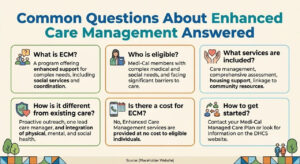
California’s CalAIM reform, launched in 2022, formally recognized housing as a healthcare issue by funding housing navigation, move-in assistance, housing sustainability services, short-term post-hospitalization housing, and recuperative care through Medi-Cal’s Community Supports program.
As we covered in the article on Can Medi-Cal Help You Find Housing?, these services are available at no cost to eligible Medi-Cal members in California. The decision to fund them through Medi-Cal rather than through a separate social services stream reflects a deliberate and evidence-based policy choice: housing instability is a healthcare problem, and addressing it is a healthcare intervention.
This shift has significant practical implications for people in Solano County. It means that a Medi-Cal member who is experiencing homelessness or at risk of losing their housing can now access housing navigation and sustainability services as part of their healthcare coverage. It means that a person being discharged from a hospital with nowhere to go can receive short-term housing support through Medi-Cal. And it means that organizations like Solano Impact Care, which deliver these services in the community, are now recognized and funded as legitimate healthcare partners rather than peripheral social services providers.
The Relationship Between Housing, Trauma, and Recovery
For many people in Solano County, the connection between housing and health is not abstract. It is immediate and personal. Housing instability and homelessness are both causes and consequences of the trauma, mental health challenges, and substance use disorders that many of the people Solano Impact Care serves are navigating.
As we explored in the article on What Is Trauma-Informed Care and Why Does It Matter?, trauma changes the brain and the nervous system in ways that affect how people respond to stress, manage relationships, and engage with support systems. Homelessness is itself traumatic. Living with chronic housing insecurity is traumatic. And both make the already difficult work of recovery and healing significantly harder.
This is why addressing housing is not something that happens after recovery or after mental health treatment has succeeded. It is something that needs to happen alongside those processes, and in many cases before them. You cannot effectively engage with therapy, with medication management, with recovery support, or with any other healthcare intervention when you do not have a safe and stable place to sleep.
The Housing First model, which research has consistently supported, is built on exactly this understanding. Stable housing is not a reward for successful treatment. It is a precondition for treatment to have any meaningful chance of working.
How Solano Impact Care Addresses Housing as Healthcare
Solano Impact Care operates from the understanding that housing is healthcare, and that genuine care coordination for people with complex needs must address housing as a central component of the care plan, not an afterthought.
The team at Solano Impact Care has personally navigated housing instability, incarceration, and the experience of trying to rebuild a life without a stable place to land. They know from the inside what housing instability does to a person’s ability to engage with anything else. And that lived knowledge shapes how they approach housing support for the people they serve.
Through Enhanced Care Management and CalAIM Community Supports,
Solano Impact Care provides housing navigation, housing sustainability services, and coordination with the broader network of housing resources in Solano County. Their care managers ensure that housing is addressed as an integrated part of every member’s care plan, coordinated alongside health, mental health, recovery, and social supports rather than managed separately.
That network includes Solano Home Assist, which provides dedicated housing counseling and workshops for Solano County residents, and Hazel’s Tranquility Place in Vallejo, which provides transitional housing and sober living support specifically for women navigating reentry and recovery.
Hazel’s Tranquility Place is a structured, supportive housing program in Solano County created to help people stabilize during vulnerable transitions. It is a transitional and sober living home in Vallejo founded by K. Patrice Williams, providing a safe haven and support services for women reentering the community from incarceration or recovering from substance use. Founded in 2019 while K. Patrice Williams was running for Solano County Supervisor, after she witnessed firsthand the serious gaps in housing and support for women and children in Solano County, Hazel’s Tranquility Place was built on the conviction that women in crisis deserve more than a referral. They deserve a place where healing is actually possible. Learn more at hazelstranquility.org.
What This Means for You
If you are a Medi-Cal member in Solano County who is dealing with housing instability, the most important thing to know is that help is available through your existing Medi-Cal coverage. You do not need to navigate the housing system alone. You do not need to figure out which programs exist, which ones you qualify for, and how to apply. That is exactly what housing navigation services through CalAIM are designed to help with.
If you are a family member watching someone you love struggle with housing instability alongside mental health or recovery challenges, the same principle applies. Housing is not a separate problem to be solved after everything else is fixed. It is a healthcare issue that needs to be addressed as part of a comprehensive plan.
If you are a healthcare provider, social worker, or community partner trying to support people with complex needs, understanding that housing is healthcare means treating housing instability as a clinical concern that belongs in the care plan, not a social problem to be referred out and forgotten.
Getting Connected
Solano Impact Care provides Enhanced Care Management and Community Supports including housing navigation and housing sustainability services for eligible Medi-Cal members across Solano County including Vallejo, Fairfield, Vacaville, Dixon, Suisun City, and Rio Vista.
The California Department of Housing and Community Development provides additional information on state housing programs and resources at hcd.ca.gov for anyone who wants to understand the broader landscape of what is available.
To get connected with Solano Impact Care and find out what housing support you may be eligible for through Medi-Cal, call (707) 301-4051 or email care@solanoimpactcare.org.
Housing is healthcare. And in Solano County, it is healthcare that Solano Impact Care is delivering every day for the people who need it most.