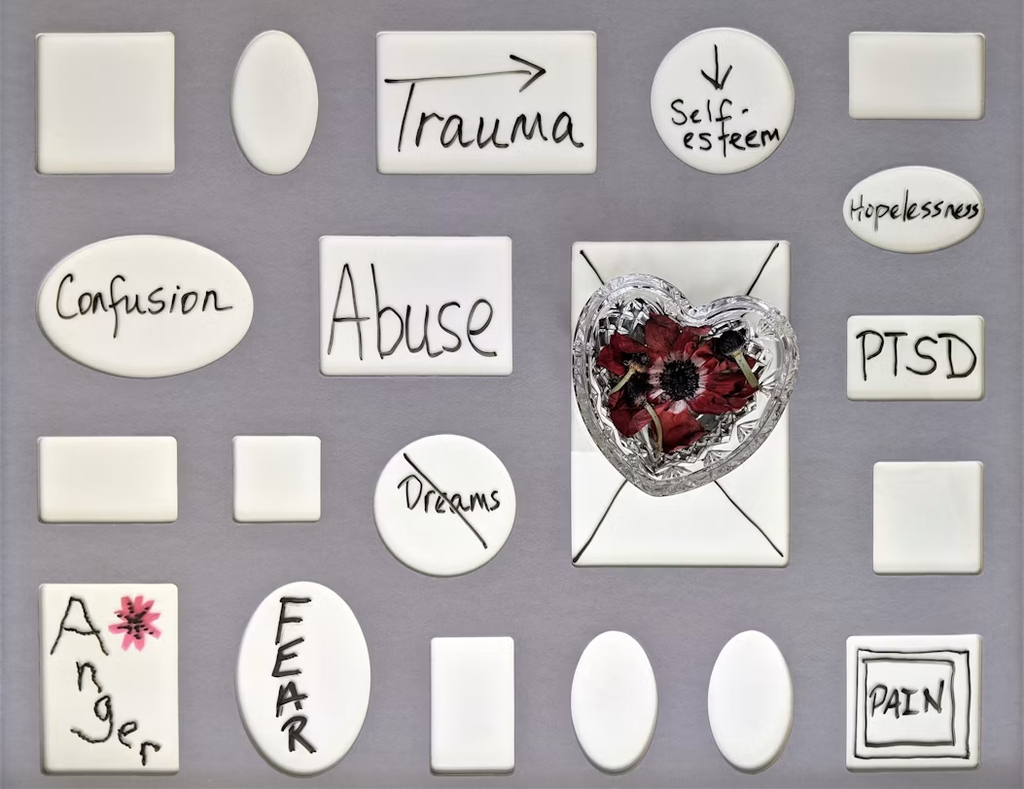
Trauma does not stay in the past. That is one of the most important things to understand about it. It does not file itself away neatly once the difficult event is over. It lives in the body, in the nervous system, in the patterns of thought and behavior and relationship that a person carries forward into every ordinary day.
Most people associate trauma with dramatic events. War. Sexual assault. Severe abuse. And those experiences absolutely cause trauma. But trauma is not defined by the size of the event. It is defined by the impact on the person who experienced it. A childhood marked by emotional neglect. Growing up in a home with addiction or domestic violence. Repeated experiences of racism or discrimination. Losing someone suddenly. Going through incarceration. Experiencing homelessness. All of these can produce the kind of lasting disruption to the nervous system that defines trauma.
And once that disruption is there, it shapes everyday life in ways that are sometimes obvious and sometimes so woven into a person’s experience that they do not recognize them as trauma at all. They just think that is how life feels. That is how relationships work. That is who they are.
This article explores how trauma shows up in daily life. Not in the dramatic moments, but in the quiet, persistent ways that affect how people function, relate, feel, and move through the world.

Photo by notorious v1ruS on Unsplash
How Trauma Changes the Nervous System
To understand how trauma affects everyday life, it helps to understand what trauma does to the brain and body at a physiological level.
When a person experiences something threatening or overwhelming, the brain’s stress response system activates. The amygdala, which is the brain’s threat detection center, sounds the alarm. The body floods with stress hormones. The nervous system mobilizes for survival. This is adaptive in the moment. It is the body doing exactly what it is supposed to do.
The problem comes when this system stays activated after the threat has passed. For people who have experienced significant or repeated trauma, particularly in childhood, the nervous system can become chronically calibrated toward threat. The amygdala remains on high alert. The body stays in a state of readiness for danger even in environments that are objectively safe.
This chronic activation has measurable effects on brain structure and function over time. The prefrontal cortex, which is responsible for reasoning, decision making, and emotional regulation, becomes less effective. The hippocampus, which processes memory, can be affected in ways that explain why traumatic memories are stored and recalled differently from ordinary memories. And the body’s stress response system becomes sensitized in ways that mean small triggers produce large reactions.
None of this is a character flaw. It is the predictable result of a nervous system that adapted to survive difficult experiences. But it shapes everyday life in ways that are real and often misunderstood.
It Shows Up in Relationships
One of the most consistent ways trauma affects everyday life is through relationships. The quality of our early relationships, and the experiences that shaped our sense of safety with other people, become the template through which we interpret and navigate all subsequent relationships.
For people who grew up in environments where caregivers were unpredictable, absent, abusive, or unable to provide consistent safety, the nervous system learned that close relationships are sources of potential danger. That learning does not simply switch off in adulthood. It shows up as:
Difficulty trusting people: Even when a person consciously wants to trust someone, the nervous system may remain on guard in ways that undermine intimacy and connection. This can look like suspicion, emotional distance, or an inability to believe that people mean what they say.
Fear of abandonment: For people whose early experiences involved loss or inconsistency, the fear that people will leave can become a driving force in adult relationships. This can manifest as clinginess, jealousy, or alternatively as a preemptive withdrawal from relationships before the anticipated abandonment can happen.
Difficulty with conflict: When conflict was associated with danger in earlier life, ordinary disagreements in adult relationships can trigger threat responses that are completely disproportionate to the actual situation. A raised voice, a critical comment, or a moment of tension can feel genuinely dangerous even when it is not.
Choosing relationships that replicate familiar dynamics: This is one of the most painful and least understood ways trauma affects relationships. People often find themselves drawn to relationship dynamics that feel familiar, even when those dynamics are harmful, because familiarity registers in the nervous system as safety even when it is the opposite.

It Shows Up in How You Respond to Stress
Trauma changes the stress response in ways that affect how a person handles the ordinary pressures of daily life. What looks from the outside like overreaction, rigidity, or emotional instability is often a nervous system responding exactly as it was trained to respond.
Hyperreactivity: A response that seems out of proportion to what triggered it. A minor setback that produces intense distress. A small criticism that feels like a devastating attack. A moment of uncertainty that creates overwhelming anxiety. These reactions make sense when you understand that the nervous system is not responding to the present moment alone. It is responding to everything the present moment reminds it of.
Hypervigilance: A constant state of scanning for threat. Difficulty relaxing even in safe environments. Noticing exits when entering a room. Feeling on edge without knowing why. Reading neutral expressions as hostile. This is exhausting. And it is the nervous system doing its job, just a job that was calibrated for a different environment than the current one.
Numbing and avoidance: On the other side of hyperreactivity is the nervous system’s other protective strategy. Shutting down. Emotional numbness. Avoidance of anything that might trigger a difficult response. Difficulty accessing feelings at all. This can look like depression, passivity, or not caring, when it is actually the nervous system protecting itself from overwhelm.
Difficulty tolerating uncertainty: For people whose early environments were unpredictable, uncertainty can feel inherently threatening. Not knowing what will happen next activates the same threat response that an actual danger would. This can show up as a need to control situations and outcomes, difficulty with change, or extreme discomfort in ambiguous situations.
It Shows Up in the Body
Trauma is stored in the body. This is not a metaphor. Research, including the influential work of Dr. Bessel van der Kolk, has documented extensively how traumatic experience is encoded in the body and how it continues to produce physical symptoms long after the events that caused it have passed.
Physical manifestations of trauma in everyday life include:
- Chronic tension, particularly in the shoulders, neck, jaw, and stomach
- Unexplained physical pain that does not have a clear medical cause
- Digestive problems including irritable bowel syndrome, nausea, and stomach pain
- Chronic fatigue that is not explained by sleep quantity alone
- Difficulty with physical touch, including flinching at unexpected contact
- A sense of disconnection from the body, as though living from the neck up
- Physical symptoms that worsen significantly during stress
Many people with trauma histories spend years pursuing medical explanations for physical symptoms that are actually the body’s ongoing response to trauma. Understanding this connection does not make the symptoms less real. It points toward the kind of treatment that actually addresses their cause.
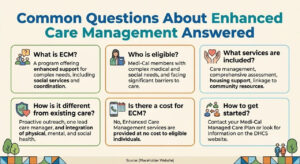
To get connected with trauma-informed care and support in Solano County, fill this form.
It Shows Up in How You Think About Yourself
Trauma, particularly trauma that occurred in childhood or that involved violation or betrayal by trusted people, consistently affects how a person thinks about themselves. The beliefs that form in the context of traumatic experience become the lens through which a person interprets their own worth, capability, and place in the world.
Common trauma-related beliefs about the self include:
- I am fundamentally broken or damaged
- I do not deserve good things
- It is only a matter of time before people find out I am not who they think I am
- I am responsible for what happened to me
- I am unlovable
- I am not capable of the things other people seem to manage easily
These beliefs are not the truth. But they feel like the truth from the inside. And when they are the operating assumptions a person carries into their daily life, they affect every decision, every relationship, and every opportunity. They drive self-sabotage, perfectionism, people-pleasing, and the kind of chronic self-criticism that makes an already difficult life significantly harder.
It Shows Up in Daily Functioning
Trauma affects the practical, everyday business of getting through life in ways that are real and often misunderstood as laziness, incompetence, or lack of motivation.
Concentration and memory: The chronic activation of the stress response system affects the brain’s ability to focus and to form and retrieve memories. People with trauma histories often struggle with concentration, memory, and follow-through in ways that are neurological rather than motivational.
Decision making: The prefrontal cortex, which is essential for weighing options, anticipating consequences, and making deliberate decisions, functions less effectively under chronic stress. For people whose nervous systems are chronically activated by trauma, decision making can be genuinely impaired in ways that look like poor judgment but are actually a brain working under conditions of chronic threat.
Sleep: As we touched on in the article on Signs You May Need More Support With Your Mental Health, sleep is one of the most sensitive indicators of mental health and trauma. Nightmares, hyperarousal at night, difficulty falling or staying asleep, and early waking are all common effects of trauma that affect daily functioning in cascading ways.
Motivation and follow-through: When the nervous system is preoccupied with managing perceived threat, there is less capacity available for the executive functions that drive motivation and follow-through. What looks like not trying is often a system that is simply overwhelmed with the work of getting through the day.
Photo by Markus Spiske on Unsplash
It Shows Up in Recovery
For people in recovery from substance use or mental health challenges, understanding how trauma affects everyday life is not academic. It is clinical.
As we explored in the article on What Is Dual Diagnosis and How Is It Treated?, trauma and substance use disorders are deeply interconnected. Many people use substances specifically to manage the everyday experience of living in a trauma-affected nervous system. The anxiety, the hypervigilance, the emotional flooding, the insomnia, the pervasive sense of threat, substances offer temporary relief from all of these. And that relief is real, even as the long-term consequences are devastating.
Recovery that does not address the underlying trauma is asking people to give up their most effective coping strategy without replacing it with anything that actually works. This is one of the primary reasons that trauma-informed care is not optional in effective recovery support. It is central.
Understanding that your symptoms, your patterns, your relationship difficulties, and your daily struggles may be connected to trauma does not mean that change is not possible. It means that the right support, support that addresses the actual root of what is happening rather than just the surface symptoms, makes change significantly more achievable.
How Solano Impact Care Responds to Trauma in Everyday Life
At Solano Impact Care, trauma is not treated as a background factor to be noted and moved past. It is treated as the central context that shapes everything about how the people they serve experience their lives and what kind of support will actually help them.
The team brings something to this work that most organizations cannot offer. They have personally experienced trauma, and they have personally experienced what it looks and feels like to try to rebuild a life while carrying it. They know from the inside how trauma shows up in daily life. And that knowledge makes them better equipped to recognize it, respond to it, and support people through it without judgment or misunderstanding.
Their trauma-informed approach means that every interaction is designed to feel safe. Every care plan is built around understanding what is underneath the presenting challenges rather than just managing their surface symptoms. Every relationship between a care manager and a client is built on the understanding that trust takes time for people whose nervous systems have learned that trust is dangerous.
For women in Solano County who need a residential environment where healing from trauma is structurally supported, Hazel’s Tranquility Place in Vallejo provides exactly that. It is a transitional and sober living home founded by K. Patrice Williams, providing a safe haven and support services for women reentering the community from incarceration or recovering from substance use. It is a structured, supportive housing program created to help people stabilize during vulnerable transitions. Founded in 2019 while K. Patrice Williams was running for Solano County Supervisor, after she witnessed firsthand the gaps in housing and support for women and children in Solano County, Hazel’s Tranquility Place was built in direct response to what she saw.
Learn more at hazelstranquility.org.
Conclusion
If you have recognized yourself in what this article describes, the most important thing to understand is this. The ways trauma is affecting your everyday life are not evidence that something is fundamentally wrong with you. They are evidence that your nervous system adapted to survive something difficult. That adaptation served a purpose. And with the right support, it can be gently, gradually unwound.
You do not have to keep living in the effects of what happened to you. Healing is real. It is not fast, and it is not linear. But it is possible. And it is more possible with support than without it.
To get connected with trauma-informed care and support in Solano County, call Solano Impact Care at (707) 301-4051 or email care@solanoimpactcare.org. You can also visit solanoimpactcare.org/get-started to take the first step.